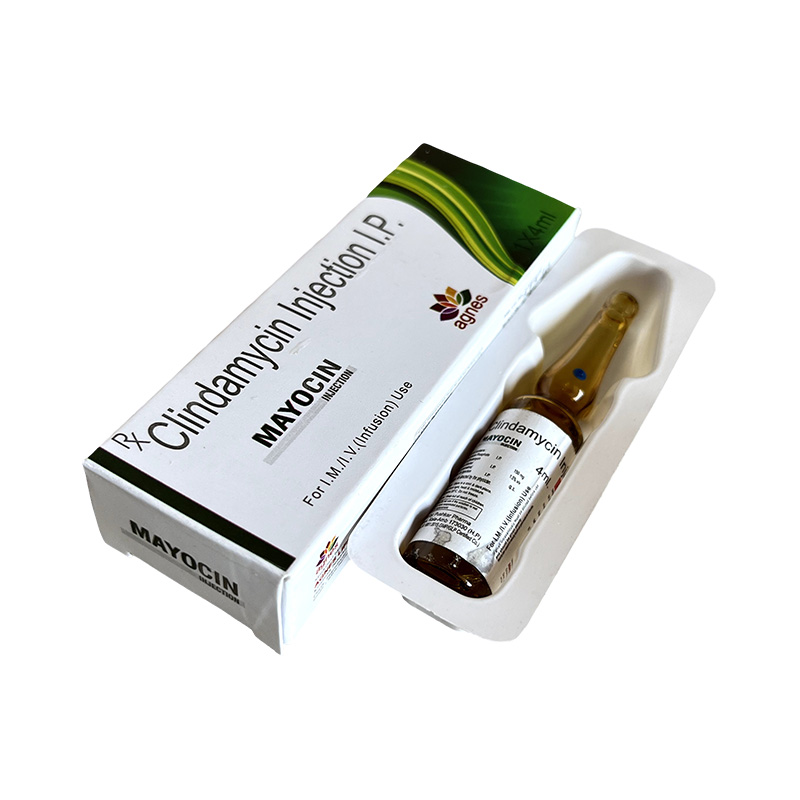
MAYOCIN
COMPOSITION
Clindamycin 600 mg (4ml Inj)
Category
Antibiotic, Lincosamide
| Packing |
|---|
SKU
3b03cdaa9f37
Categories AGNES, INJECTABLES, Injection
ENQUIRY
Indications
MAYOCIN is a hospital-use antibiotic injection containing Clindamycin — a medicine that belongs to the lincosamide group of antibiotics.
What makes Clindamycin stand out is that it works particularly well against two types of bacteria that many other common antibiotics struggle with — anaerobic bacteria (bacteria that survive without oxygen) and gram-positive bacteria.
These two types are responsible for some of the most stubborn and deep-seated infections seen in clinical practice. MAYOCIN is prescribed for:
Anaerobic and Gram-Positive Bacterial Infections: The real strength of Clindamycin lies in covering anaerobic bacteria — the kind that live and thrive in places where oxygen does not reach easily, like deep wounds, abscesses, dental roots, the gut, and the pelvic area. Most common antibiotics do not cover these bacteria well. MAYOCIN does.
Skin and Soft Tissue Infections: Used in serious skin infections, cellulitis, infected wounds, diabetic foot infections, and deep tissue infections — especially when the bacteria involved are gram-positive organisms like Staphylococcus aureus, including some MRSA strains.
Bone and Joint Infections (Osteomyelitis and Septic Arthritis): Clindamycin penetrates bone tissue very well — better than many other antibiotics. This makes MAYOCIN a commonly used choice in bone infections, where the antibiotic needs to reach deep into the affected tissue to clear the bacteria properly.
Dental and Oral Infections: One of the most widely used antibiotics in dental practice—prescribed for tooth abscesses, gum infections, and oral infections caused by anaerobic bacteria. It is also used before certain dental procedures in patients at risk of infection. The injectable form is used when the infection is severe or when the patient cannot take oral medicine.
Pelvic Infections and Abscesses: Used in pelvic inflammatory disease, tubo-ovarian abscesses, and postpartum or postsurgical infections of the female reproductive organs — conditions where anaerobic bacteria are almost always involved alongside other organisms.
Abdominal Infections and Abscesses: Intra-abdominal abscesses and peritonitis often involve anaerobic bacteria from the gut. MAYOCIN is used as part of the treatment in these cases — sometimes alongside other antibiotics for broader coverage.
Malaria (Combination Therapy): Clindamycin is used alongside Quinine in the treatment of malaria, particularly in pregnant women and patients where other antimalarial medicines are not suitable. It targets a specific stage of the malaria parasite’s life cycle.
Alternative for Penicillin-Allergic Patients: In patients who are allergic to penicillin or other beta-lactam antibiotics and cannot take standard antibiotics, clindamycin is one of the most practical and well-established alternatives — especially for skin, dental, and soft tissue infections.
What makes Clindamycin stand out is that it works particularly well against two types of bacteria that many other common antibiotics struggle with — anaerobic bacteria (bacteria that survive without oxygen) and gram-positive bacteria.
These two types are responsible for some of the most stubborn and deep-seated infections seen in clinical practice. MAYOCIN is prescribed for:
Anaerobic and Gram-Positive Bacterial Infections: The real strength of Clindamycin lies in covering anaerobic bacteria — the kind that live and thrive in places where oxygen does not reach easily, like deep wounds, abscesses, dental roots, the gut, and the pelvic area. Most common antibiotics do not cover these bacteria well. MAYOCIN does.
Skin and Soft Tissue Infections: Used in serious skin infections, cellulitis, infected wounds, diabetic foot infections, and deep tissue infections — especially when the bacteria involved are gram-positive organisms like Staphylococcus aureus, including some MRSA strains.
Bone and Joint Infections (Osteomyelitis and Septic Arthritis): Clindamycin penetrates bone tissue very well — better than many other antibiotics. This makes MAYOCIN a commonly used choice in bone infections, where the antibiotic needs to reach deep into the affected tissue to clear the bacteria properly.
Dental and Oral Infections: One of the most widely used antibiotics in dental practice—prescribed for tooth abscesses, gum infections, and oral infections caused by anaerobic bacteria. It is also used before certain dental procedures in patients at risk of infection. The injectable form is used when the infection is severe or when the patient cannot take oral medicine.
Pelvic Infections and Abscesses: Used in pelvic inflammatory disease, tubo-ovarian abscesses, and postpartum or postsurgical infections of the female reproductive organs — conditions where anaerobic bacteria are almost always involved alongside other organisms.
Abdominal Infections and Abscesses: Intra-abdominal abscesses and peritonitis often involve anaerobic bacteria from the gut. MAYOCIN is used as part of the treatment in these cases — sometimes alongside other antibiotics for broader coverage.
Malaria (Combination Therapy): Clindamycin is used alongside Quinine in the treatment of malaria, particularly in pregnant women and patients where other antimalarial medicines are not suitable. It targets a specific stage of the malaria parasite’s life cycle.
Alternative for Penicillin-Allergic Patients: In patients who are allergic to penicillin or other beta-lactam antibiotics and cannot take standard antibiotics, clindamycin is one of the most practical and well-established alternatives — especially for skin, dental, and soft tissue infections.
Uses
MAYOCIN contains clindamycin, which works by entering the bacterial cell and blocking a key step in protein production. Bacteria need to constantly make new proteins to survive, grow, and multiply.
Clindamycin attaches to the ribosome inside the bacterial cell — the part responsible for making proteins — and stops it from working. Without the ability to make proteins, the bacteria cannot continue to function and eventually die. This is called ‘bacteriostatic action’ at normal doses and ‘bactericidal’ at higher concentrations.
Effective in Anaerobic and Gram-Positive Infections: Clindamycin specifically targets the bacteria that cause deep, oxygen-free infections – places inside the body where most other antibiotics simply do not reach or do not work. This is what makes it irreplaceable in certain types of infections.
Used in Skin, Bone, and Dental Infections: Clindamycin gets into tissue very well – particularly skin, bone, and soft tissue. In bone infections, its penetration is significantly better than that of many other antibiotics, which is why doctors specifically choose it for osteomyelitis. In dental infections, it covers the exact bacteria responsible and does it fast.
Treats Pelvic Infections and Abscesses: Inside the pelvic area and abdominal cavity, anaerobic bacteria are very common players in infection. Clindamycin is one of the most reliable choices for covering these bacteria alongside other antibiotics in combination therapy.
Used in Malaria Combination Therapy: When given alongside quinine, clindamycin helps clear the malaria parasite more effectively and reduces the chance of treatment failure. It is particularly important in cases where standard antimalarials cannot be used.
Trusted Alternative for Penicillin-Allergic Patients: For patients who cannot use penicillin or cephalosporins, Clindamycin fills an important gap — covering gram-positive bacteria and anaerobes in a way that very few other non-beta-lactam antibiotics can match.
Reaches Infection Sites Other Antibiotics Miss: Whether it is inside a tooth root, deep in a bone, inside a pelvic abscess, or buried in infected soft tissue — Clindamycin reaches these places well and maintains effective levels for long enough to do its job.
Clindamycin attaches to the ribosome inside the bacterial cell — the part responsible for making proteins — and stops it from working. Without the ability to make proteins, the bacteria cannot continue to function and eventually die. This is called ‘bacteriostatic action’ at normal doses and ‘bactericidal’ at higher concentrations.
Effective in Anaerobic and Gram-Positive Infections: Clindamycin specifically targets the bacteria that cause deep, oxygen-free infections – places inside the body where most other antibiotics simply do not reach or do not work. This is what makes it irreplaceable in certain types of infections.
Used in Skin, Bone, and Dental Infections: Clindamycin gets into tissue very well – particularly skin, bone, and soft tissue. In bone infections, its penetration is significantly better than that of many other antibiotics, which is why doctors specifically choose it for osteomyelitis. In dental infections, it covers the exact bacteria responsible and does it fast.
Treats Pelvic Infections and Abscesses: Inside the pelvic area and abdominal cavity, anaerobic bacteria are very common players in infection. Clindamycin is one of the most reliable choices for covering these bacteria alongside other antibiotics in combination therapy.
Used in Malaria Combination Therapy: When given alongside quinine, clindamycin helps clear the malaria parasite more effectively and reduces the chance of treatment failure. It is particularly important in cases where standard antimalarials cannot be used.
Trusted Alternative for Penicillin-Allergic Patients: For patients who cannot use penicillin or cephalosporins, Clindamycin fills an important gap — covering gram-positive bacteria and anaerobes in a way that very few other non-beta-lactam antibiotics can match.
Reaches Infection Sites Other Antibiotics Miss: Whether it is inside a tooth root, deep in a bone, inside a pelvic abscess, or buried in infected soft tissue — Clindamycin reaches these places well and maintains effective levels for long enough to do its job.
Dosage & Storage
Dosage: The dose is decided by the treating doctor based on the type and severity of the infection, the patient’s age, weight, and kidney or liver function. The standard adult dose is 600mg given every 8 to 12 hours as an IV infusion, but this varies by condition.
How It Is Given: As a slow intravenous (IV) infusion diluted in a suitable IV fluid. It must never be given as a rapid IV push or as a direct, undiluted injection into the vein — doing so can cause serious cardiac problems. It can also be given as a deep intramuscular (IM) injection in certain situations.
Infusion Time: When given intravenously, it should always be infused slowly — typically over 10 to 60 minutes, depending on the dose. The nurse will follow the correct rate.
Storage: Store the vial at room temperature between 15°C and 30°C in a cool, dry place away from direct sunlight and moisture.
Protect from Light: Keep in the original carton until use.
Do Not Freeze: Do not refrigerate or freeze the vials. Freezing can damage the solution.
After Dilution: Once the vial is diluted into an IV bag, use the solution within the recommended time as per the pharmacy or hospital protocol.
Keep Out of Reach: Always store safely away from children and pets.
How It Is Given: As a slow intravenous (IV) infusion diluted in a suitable IV fluid. It must never be given as a rapid IV push or as a direct, undiluted injection into the vein — doing so can cause serious cardiac problems. It can also be given as a deep intramuscular (IM) injection in certain situations.
Infusion Time: When given intravenously, it should always be infused slowly — typically over 10 to 60 minutes, depending on the dose. The nurse will follow the correct rate.
Storage: Store the vial at room temperature between 15°C and 30°C in a cool, dry place away from direct sunlight and moisture.
Protect from Light: Keep in the original carton until use.
Do Not Freeze: Do not refrigerate or freeze the vials. Freezing can damage the solution.
After Dilution: Once the vial is diluted into an IV bag, use the solution within the recommended time as per the pharmacy or hospital protocol.
Keep Out of Reach: Always store safely away from children and pets.
Directions For Use
Hospital Use Only: MAYOCIN is strictly for use in a hospital or clinic and must be prepared and given by a trained nurse or doctor. It is not for home use.
Never Give as a Rapid IV Push: This is very important – clindamycin must never be pushed quickly into the vein undiluted. It must always be diluted in an IV bag and given slowly as a drip. Giving it too fast can cause dangerous changes in heart rhythm.
Inspect Before Use: Check the vial before use. The solution should be clear and free from particles or discolouration. If it looks abnormal, do not use it — inform the nurse or pharmacist.
Complete the Full Course: Even if the patient starts feeling better after a couple of doses, the full prescribed course must be completed. Stopping early gives the surviving bacteria a chance to come back — and the second time is always harder to treat.
Follow the Dose Schedule: Doses should be given at evenly spaced intervals through the day — usually every 8 or 12 hours — to keep the antibiotic working at a steady level in the body.
Watch for Diarrhoea During Treatment: This is important — if the patient develops severe, watery, or bloody diarrhoea during or after the course, inform the doctor immediately. This could be a sign of a serious gut infection called C. difficile colitis, which needs prompt attention and should not be ignored.
Missed Dose: If a scheduled dose is missed in the hospital, inform the nurse or doctor right away. Never give two doses together to make up for a missed one.
Never Give as a Rapid IV Push: This is very important – clindamycin must never be pushed quickly into the vein undiluted. It must always be diluted in an IV bag and given slowly as a drip. Giving it too fast can cause dangerous changes in heart rhythm.
Inspect Before Use: Check the vial before use. The solution should be clear and free from particles or discolouration. If it looks abnormal, do not use it — inform the nurse or pharmacist.
Complete the Full Course: Even if the patient starts feeling better after a couple of doses, the full prescribed course must be completed. Stopping early gives the surviving bacteria a chance to come back — and the second time is always harder to treat.
Follow the Dose Schedule: Doses should be given at evenly spaced intervals through the day — usually every 8 or 12 hours — to keep the antibiotic working at a steady level in the body.
Watch for Diarrhoea During Treatment: This is important — if the patient develops severe, watery, or bloody diarrhoea during or after the course, inform the doctor immediately. This could be a sign of a serious gut infection called C. difficile colitis, which needs prompt attention and should not be ignored.
Missed Dose: If a scheduled dose is missed in the hospital, inform the nurse or doctor right away. Never give two doses together to make up for a missed one.
Precautions
Before starting MAYOCIN, the doctor must know the following:
Lincosamide or Clindamycin Allergy: Do not use in patients who have had any allergic reaction to clindamycin or lincomycin in the past. Full allergy history must be shared before starting.
History of Inflammatory Bowel Disease: Clindamycin should be used with extra caution in patients with a history of Crohn’s disease, ulcerative colitis, or any other inflammatory bowel condition, as it can worsen gut symptoms and increase the risk of C. difficile infection.
C. difficile Risk: Clindamycin is one of the antibiotics most associated with Clostridioides difficile (C. diff) infection – a serious gut infection that can cause severe, persistent diarrhoea and colitis. The risk is higher with longer courses and in elderly or hospitalised patients. Any unusual or severe diarrhoea during or after the course must be reported to the doctor straight away.
Liver Problems: Clindamycin is processed mainly by the liver. Patients with significant liver disease need dose adjustment and monitoring during treatment.
Kidney Problems: Generally well-tolerated in patients with kidney disease, but monitoring is still recommended during long courses.
Pregnancy and Breastfeeding: Use only when clearly necessary and as prescribed by the doctor. Clindamycin does pass into breast milk, so the doctor needs to decide whether breastfeeding should be paused during treatment.
Neuromuscular Disorders: Clindamycin can affect the junction between nerves and muscles. Use with caution in patients with conditions like myasthenia gravis — it may worsen muscle weakness.
Other Medicines: Tell the doctor about all current medications — especially muscle relaxants used during anaesthesia, as clindamycin can enhance their effect. This is particularly relevant before surgical procedures. Elderly Patients: Older patients are at higher risk of developing C. difficile colitis during antibiotic treatment. Extra monitoring is recommended.
Lincosamide or Clindamycin Allergy: Do not use in patients who have had any allergic reaction to clindamycin or lincomycin in the past. Full allergy history must be shared before starting.
History of Inflammatory Bowel Disease: Clindamycin should be used with extra caution in patients with a history of Crohn’s disease, ulcerative colitis, or any other inflammatory bowel condition, as it can worsen gut symptoms and increase the risk of C. difficile infection.
C. difficile Risk: Clindamycin is one of the antibiotics most associated with Clostridioides difficile (C. diff) infection – a serious gut infection that can cause severe, persistent diarrhoea and colitis. The risk is higher with longer courses and in elderly or hospitalised patients. Any unusual or severe diarrhoea during or after the course must be reported to the doctor straight away.
Liver Problems: Clindamycin is processed mainly by the liver. Patients with significant liver disease need dose adjustment and monitoring during treatment.
Kidney Problems: Generally well-tolerated in patients with kidney disease, but monitoring is still recommended during long courses.
Pregnancy and Breastfeeding: Use only when clearly necessary and as prescribed by the doctor. Clindamycin does pass into breast milk, so the doctor needs to decide whether breastfeeding should be paused during treatment.
Neuromuscular Disorders: Clindamycin can affect the junction between nerves and muscles. Use with caution in patients with conditions like myasthenia gravis — it may worsen muscle weakness.
Other Medicines: Tell the doctor about all current medications — especially muscle relaxants used during anaesthesia, as clindamycin can enhance their effect. This is particularly relevant before surgical procedures. Elderly Patients: Older patients are at higher risk of developing C. difficile colitis during antibiotic treatment. Extra monitoring is recommended.
Side Effects
Diarrhea
Abdominal pain
Rash
Nausea
C. difficile-associated diarrhea (rare but serious)
Abdominal pain
Rash
Nausea
C. difficile-associated diarrhea (rare but serious)
Medical Disclaimer
The information given here is for general understanding and educational purposes only. It does not replace the advice of a qualified doctor or the clinical judgement of a trained medical professional. MAYOCIN is a prescription-only injectable antibiotic and must always be used under the direct supervision of a licensed doctor in a hospital or clinical setting.
Agnes Life Sciences does not claim that this or any of its products can diagnose, treat, cure, or prevent any disease. Always consult your doctor for the right diagnosis and a treatment plan suited to your individual condition.
Agnes Life Sciences does not claim that this or any of its products can diagnose, treat, cure, or prevent any disease. Always consult your doctor for the right diagnosis and a treatment plan suited to your individual condition.
Indications
MAYOCIN is a hospital-use antibiotic injection containing Clindamycin — a medicine that belongs to the lincosamide group of antibiotics.
What makes Clindamycin stand out is that it works particularly well against two types of bacteria that many other common antibiotics struggle with — anaerobic bacteria (bacteria that survive without oxygen) and gram-positive bacteria.
These two types are responsible for some of the most stubborn and deep-seated infections seen in clinical practice. MAYOCIN is prescribed for:
Anaerobic and Gram-Positive Bacterial Infections: The real strength of Clindamycin lies in covering anaerobic bacteria — the kind that live and thrive in places where oxygen does not reach easily, like deep wounds, abscesses, dental roots, the gut, and the pelvic area. Most common antibiotics do not cover these bacteria well. MAYOCIN does.
Skin and Soft Tissue Infections: Used in serious skin infections, cellulitis, infected wounds, diabetic foot infections, and deep tissue infections — especially when the bacteria involved are gram-positive organisms like Staphylococcus aureus, including some MRSA strains.
Bone and Joint Infections (Osteomyelitis and Septic Arthritis): Clindamycin penetrates bone tissue very well — better than many other antibiotics. This makes MAYOCIN a commonly used choice in bone infections, where the antibiotic needs to reach deep into the affected tissue to clear the bacteria properly.
Dental and Oral Infections: One of the most widely used antibiotics in dental practice—prescribed for tooth abscesses, gum infections, and oral infections caused by anaerobic bacteria. It is also used before certain dental procedures in patients at risk of infection. The injectable form is used when the infection is severe or when the patient cannot take oral medicine.
Pelvic Infections and Abscesses: Used in pelvic inflammatory disease, tubo-ovarian abscesses, and postpartum or postsurgical infections of the female reproductive organs — conditions where anaerobic bacteria are almost always involved alongside other organisms.
Abdominal Infections and Abscesses: Intra-abdominal abscesses and peritonitis often involve anaerobic bacteria from the gut. MAYOCIN is used as part of the treatment in these cases — sometimes alongside other antibiotics for broader coverage.
Malaria (Combination Therapy): Clindamycin is used alongside Quinine in the treatment of malaria, particularly in pregnant women and patients where other antimalarial medicines are not suitable. It targets a specific stage of the malaria parasite’s life cycle.
Alternative for Penicillin-Allergic Patients: In patients who are allergic to penicillin or other beta-lactam antibiotics and cannot take standard antibiotics, clindamycin is one of the most practical and well-established alternatives — especially for skin, dental, and soft tissue infections.
What makes Clindamycin stand out is that it works particularly well against two types of bacteria that many other common antibiotics struggle with — anaerobic bacteria (bacteria that survive without oxygen) and gram-positive bacteria.
These two types are responsible for some of the most stubborn and deep-seated infections seen in clinical practice. MAYOCIN is prescribed for:
Anaerobic and Gram-Positive Bacterial Infections: The real strength of Clindamycin lies in covering anaerobic bacteria — the kind that live and thrive in places where oxygen does not reach easily, like deep wounds, abscesses, dental roots, the gut, and the pelvic area. Most common antibiotics do not cover these bacteria well. MAYOCIN does.
Skin and Soft Tissue Infections: Used in serious skin infections, cellulitis, infected wounds, diabetic foot infections, and deep tissue infections — especially when the bacteria involved are gram-positive organisms like Staphylococcus aureus, including some MRSA strains.
Bone and Joint Infections (Osteomyelitis and Septic Arthritis): Clindamycin penetrates bone tissue very well — better than many other antibiotics. This makes MAYOCIN a commonly used choice in bone infections, where the antibiotic needs to reach deep into the affected tissue to clear the bacteria properly.
Dental and Oral Infections: One of the most widely used antibiotics in dental practice—prescribed for tooth abscesses, gum infections, and oral infections caused by anaerobic bacteria. It is also used before certain dental procedures in patients at risk of infection. The injectable form is used when the infection is severe or when the patient cannot take oral medicine.
Pelvic Infections and Abscesses: Used in pelvic inflammatory disease, tubo-ovarian abscesses, and postpartum or postsurgical infections of the female reproductive organs — conditions where anaerobic bacteria are almost always involved alongside other organisms.
Abdominal Infections and Abscesses: Intra-abdominal abscesses and peritonitis often involve anaerobic bacteria from the gut. MAYOCIN is used as part of the treatment in these cases — sometimes alongside other antibiotics for broader coverage.
Malaria (Combination Therapy): Clindamycin is used alongside Quinine in the treatment of malaria, particularly in pregnant women and patients where other antimalarial medicines are not suitable. It targets a specific stage of the malaria parasite’s life cycle.
Alternative for Penicillin-Allergic Patients: In patients who are allergic to penicillin or other beta-lactam antibiotics and cannot take standard antibiotics, clindamycin is one of the most practical and well-established alternatives — especially for skin, dental, and soft tissue infections.
Uses
MAYOCIN contains clindamycin, which works by entering the bacterial cell and blocking a key step in protein production. Bacteria need to constantly make new proteins to survive, grow, and multiply.
Clindamycin attaches to the ribosome inside the bacterial cell — the part responsible for making proteins — and stops it from working. Without the ability to make proteins, the bacteria cannot continue to function and eventually die. This is called ‘bacteriostatic action’ at normal doses and ‘bactericidal’ at higher concentrations.
Effective in Anaerobic and Gram-Positive Infections: Clindamycin specifically targets the bacteria that cause deep, oxygen-free infections – places inside the body where most other antibiotics simply do not reach or do not work. This is what makes it irreplaceable in certain types of infections.
Used in Skin, Bone, and Dental Infections: Clindamycin gets into tissue very well – particularly skin, bone, and soft tissue. In bone infections, its penetration is significantly better than that of many other antibiotics, which is why doctors specifically choose it for osteomyelitis. In dental infections, it covers the exact bacteria responsible and does it fast.
Treats Pelvic Infections and Abscesses: Inside the pelvic area and abdominal cavity, anaerobic bacteria are very common players in infection. Clindamycin is one of the most reliable choices for covering these bacteria alongside other antibiotics in combination therapy.
Used in Malaria Combination Therapy: When given alongside quinine, clindamycin helps clear the malaria parasite more effectively and reduces the chance of treatment failure. It is particularly important in cases where standard antimalarials cannot be used.
Trusted Alternative for Penicillin-Allergic Patients: For patients who cannot use penicillin or cephalosporins, Clindamycin fills an important gap — covering gram-positive bacteria and anaerobes in a way that very few other non-beta-lactam antibiotics can match.
Reaches Infection Sites Other Antibiotics Miss: Whether it is inside a tooth root, deep in a bone, inside a pelvic abscess, or buried in infected soft tissue — Clindamycin reaches these places well and maintains effective levels for long enough to do its job.
Clindamycin attaches to the ribosome inside the bacterial cell — the part responsible for making proteins — and stops it from working. Without the ability to make proteins, the bacteria cannot continue to function and eventually die. This is called ‘bacteriostatic action’ at normal doses and ‘bactericidal’ at higher concentrations.
Effective in Anaerobic and Gram-Positive Infections: Clindamycin specifically targets the bacteria that cause deep, oxygen-free infections – places inside the body where most other antibiotics simply do not reach or do not work. This is what makes it irreplaceable in certain types of infections.
Used in Skin, Bone, and Dental Infections: Clindamycin gets into tissue very well – particularly skin, bone, and soft tissue. In bone infections, its penetration is significantly better than that of many other antibiotics, which is why doctors specifically choose it for osteomyelitis. In dental infections, it covers the exact bacteria responsible and does it fast.
Treats Pelvic Infections and Abscesses: Inside the pelvic area and abdominal cavity, anaerobic bacteria are very common players in infection. Clindamycin is one of the most reliable choices for covering these bacteria alongside other antibiotics in combination therapy.
Used in Malaria Combination Therapy: When given alongside quinine, clindamycin helps clear the malaria parasite more effectively and reduces the chance of treatment failure. It is particularly important in cases where standard antimalarials cannot be used.
Trusted Alternative for Penicillin-Allergic Patients: For patients who cannot use penicillin or cephalosporins, Clindamycin fills an important gap — covering gram-positive bacteria and anaerobes in a way that very few other non-beta-lactam antibiotics can match.
Reaches Infection Sites Other Antibiotics Miss: Whether it is inside a tooth root, deep in a bone, inside a pelvic abscess, or buried in infected soft tissue — Clindamycin reaches these places well and maintains effective levels for long enough to do its job.
Dosage & Storage
Dosage: The dose is decided by the treating doctor based on the type and severity of the infection, the patient’s age, weight, and kidney or liver function. The standard adult dose is 600mg given every 8 to 12 hours as an IV infusion, but this varies by condition.
How It Is Given: As a slow intravenous (IV) infusion diluted in a suitable IV fluid. It must never be given as a rapid IV push or as a direct, undiluted injection into the vein — doing so can cause serious cardiac problems. It can also be given as a deep intramuscular (IM) injection in certain situations.
Infusion Time: When given intravenously, it should always be infused slowly — typically over 10 to 60 minutes, depending on the dose. The nurse will follow the correct rate.
Storage: Store the vial at room temperature between 15°C and 30°C in a cool, dry place away from direct sunlight and moisture.
Protect from Light: Keep in the original carton until use.
Do Not Freeze: Do not refrigerate or freeze the vials. Freezing can damage the solution.
After Dilution: Once the vial is diluted into an IV bag, use the solution within the recommended time as per the pharmacy or hospital protocol.
Keep Out of Reach: Always store safely away from children and pets.
How It Is Given: As a slow intravenous (IV) infusion diluted in a suitable IV fluid. It must never be given as a rapid IV push or as a direct, undiluted injection into the vein — doing so can cause serious cardiac problems. It can also be given as a deep intramuscular (IM) injection in certain situations.
Infusion Time: When given intravenously, it should always be infused slowly — typically over 10 to 60 minutes, depending on the dose. The nurse will follow the correct rate.
Storage: Store the vial at room temperature between 15°C and 30°C in a cool, dry place away from direct sunlight and moisture.
Protect from Light: Keep in the original carton until use.
Do Not Freeze: Do not refrigerate or freeze the vials. Freezing can damage the solution.
After Dilution: Once the vial is diluted into an IV bag, use the solution within the recommended time as per the pharmacy or hospital protocol.
Keep Out of Reach: Always store safely away from children and pets.
Directions For Use
Hospital Use Only: MAYOCIN is strictly for use in a hospital or clinic and must be prepared and given by a trained nurse or doctor. It is not for home use.
Never Give as a Rapid IV Push: This is very important – clindamycin must never be pushed quickly into the vein undiluted. It must always be diluted in an IV bag and given slowly as a drip. Giving it too fast can cause dangerous changes in heart rhythm.
Inspect Before Use: Check the vial before use. The solution should be clear and free from particles or discolouration. If it looks abnormal, do not use it — inform the nurse or pharmacist.
Complete the Full Course: Even if the patient starts feeling better after a couple of doses, the full prescribed course must be completed. Stopping early gives the surviving bacteria a chance to come back — and the second time is always harder to treat.
Follow the Dose Schedule: Doses should be given at evenly spaced intervals through the day — usually every 8 or 12 hours — to keep the antibiotic working at a steady level in the body.
Watch for Diarrhoea During Treatment: This is important — if the patient develops severe, watery, or bloody diarrhoea during or after the course, inform the doctor immediately. This could be a sign of a serious gut infection called C. difficile colitis, which needs prompt attention and should not be ignored.
Missed Dose: If a scheduled dose is missed in the hospital, inform the nurse or doctor right away. Never give two doses together to make up for a missed one.
Never Give as a Rapid IV Push: This is very important – clindamycin must never be pushed quickly into the vein undiluted. It must always be diluted in an IV bag and given slowly as a drip. Giving it too fast can cause dangerous changes in heart rhythm.
Inspect Before Use: Check the vial before use. The solution should be clear and free from particles or discolouration. If it looks abnormal, do not use it — inform the nurse or pharmacist.
Complete the Full Course: Even if the patient starts feeling better after a couple of doses, the full prescribed course must be completed. Stopping early gives the surviving bacteria a chance to come back — and the second time is always harder to treat.
Follow the Dose Schedule: Doses should be given at evenly spaced intervals through the day — usually every 8 or 12 hours — to keep the antibiotic working at a steady level in the body.
Watch for Diarrhoea During Treatment: This is important — if the patient develops severe, watery, or bloody diarrhoea during or after the course, inform the doctor immediately. This could be a sign of a serious gut infection called C. difficile colitis, which needs prompt attention and should not be ignored.
Missed Dose: If a scheduled dose is missed in the hospital, inform the nurse or doctor right away. Never give two doses together to make up for a missed one.
Precautions
Before starting MAYOCIN, the doctor must know the following:
Lincosamide or Clindamycin Allergy: Do not use in patients who have had any allergic reaction to clindamycin or lincomycin in the past. Full allergy history must be shared before starting.
History of Inflammatory Bowel Disease: Clindamycin should be used with extra caution in patients with a history of Crohn’s disease, ulcerative colitis, or any other inflammatory bowel condition, as it can worsen gut symptoms and increase the risk of C. difficile infection.
C. difficile Risk: Clindamycin is one of the antibiotics most associated with Clostridioides difficile (C. diff) infection – a serious gut infection that can cause severe, persistent diarrhoea and colitis. The risk is higher with longer courses and in elderly or hospitalised patients. Any unusual or severe diarrhoea during or after the course must be reported to the doctor straight away.
Liver Problems: Clindamycin is processed mainly by the liver. Patients with significant liver disease need dose adjustment and monitoring during treatment.
Kidney Problems: Generally well-tolerated in patients with kidney disease, but monitoring is still recommended during long courses.
Pregnancy and Breastfeeding: Use only when clearly necessary and as prescribed by the doctor. Clindamycin does pass into breast milk, so the doctor needs to decide whether breastfeeding should be paused during treatment.
Neuromuscular Disorders: Clindamycin can affect the junction between nerves and muscles. Use with caution in patients with conditions like myasthenia gravis — it may worsen muscle weakness.
Other Medicines: Tell the doctor about all current medications — especially muscle relaxants used during anaesthesia, as clindamycin can enhance their effect. This is particularly relevant before surgical procedures. Elderly Patients: Older patients are at higher risk of developing C. difficile colitis during antibiotic treatment. Extra monitoring is recommended.
Lincosamide or Clindamycin Allergy: Do not use in patients who have had any allergic reaction to clindamycin or lincomycin in the past. Full allergy history must be shared before starting.
History of Inflammatory Bowel Disease: Clindamycin should be used with extra caution in patients with a history of Crohn’s disease, ulcerative colitis, or any other inflammatory bowel condition, as it can worsen gut symptoms and increase the risk of C. difficile infection.
C. difficile Risk: Clindamycin is one of the antibiotics most associated with Clostridioides difficile (C. diff) infection – a serious gut infection that can cause severe, persistent diarrhoea and colitis. The risk is higher with longer courses and in elderly or hospitalised patients. Any unusual or severe diarrhoea during or after the course must be reported to the doctor straight away.
Liver Problems: Clindamycin is processed mainly by the liver. Patients with significant liver disease need dose adjustment and monitoring during treatment.
Kidney Problems: Generally well-tolerated in patients with kidney disease, but monitoring is still recommended during long courses.
Pregnancy and Breastfeeding: Use only when clearly necessary and as prescribed by the doctor. Clindamycin does pass into breast milk, so the doctor needs to decide whether breastfeeding should be paused during treatment.
Neuromuscular Disorders: Clindamycin can affect the junction between nerves and muscles. Use with caution in patients with conditions like myasthenia gravis — it may worsen muscle weakness.
Other Medicines: Tell the doctor about all current medications — especially muscle relaxants used during anaesthesia, as clindamycin can enhance their effect. This is particularly relevant before surgical procedures. Elderly Patients: Older patients are at higher risk of developing C. difficile colitis during antibiotic treatment. Extra monitoring is recommended.
Side Effects
Diarrhea
Abdominal pain
Rash
Nausea
C. difficile-associated diarrhea (rare but serious)
Abdominal pain
Rash
Nausea
C. difficile-associated diarrhea (rare but serious)
Medical Disclaimer
The information given here is for general understanding and educational purposes only. It does not replace the advice of a qualified doctor or the clinical judgement of a trained medical professional. MAYOCIN is a prescription-only injectable antibiotic and must always be used under the direct supervision of a licensed doctor in a hospital or clinical setting.
Agnes Life Sciences does not claim that this or any of its products can diagnose, treat, cure, or prevent any disease. Always consult your doctor for the right diagnosis and a treatment plan suited to your individual condition.
Agnes Life Sciences does not claim that this or any of its products can diagnose, treat, cure, or prevent any disease. Always consult your doctor for the right diagnosis and a treatment plan suited to your individual condition.