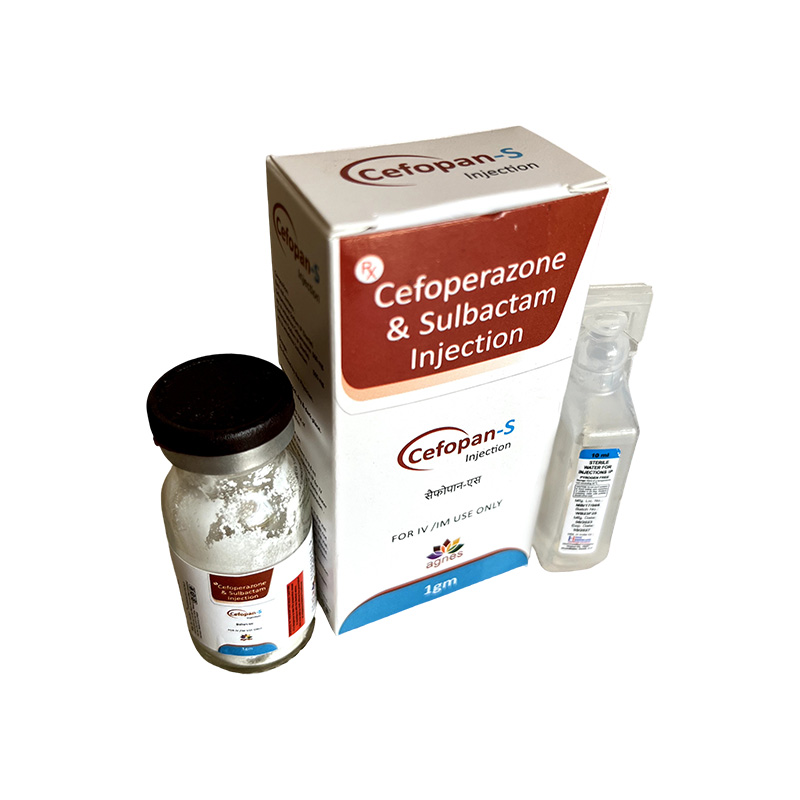
CEFOPAN-S
COMPOSITION
Cefoperazone 500 mg + Sulbactam 500 mg (Injection)
Category
Antibiotic
| Packing |
|---|
SKU
6aca873aeca2
Categories AGNES, INJECTABLES, Injection
ENQUIRY
Indications
CEFOPAN-S is a combination antibiotic injection used in hospitals to treat moderate to serious bacterial infections. It pairs Cefoperazone with Sulbactam — two medicines that work better together than they do alone. This combination is especially useful when the bacteria causing the infection have become resistant to simpler antibiotics. Doctors prescribe it for:
Lung and Chest Infections: Used in pneumonia and bronchitis where the infection is serious enough to need injectable antibiotic treatment rather than oral tablets.
Stomach and Abdominal Infections: Helpful in treating peritonitis and infections of the bile duct or gallbladder area — conditions that are common after abdominal surgeries or in patients with liver or digestive problems.
Urinary Tract Infections: Particularly useful when the UTI is caused by bacteria that produce protective enzymes to resist common antibiotics — CEFOPAN-S works against these bacteria because Sulbactam blocks those enzymes.
Skin and Wound Infections: Used in cellulitis, infected surgical wounds, and other soft tissue infections where bacteria have gone deeper into the skin and tissue.
Gynaecological Infections: Prescribed in infections of the uterus, fallopian tubes, and surrounding pelvic area — often after delivery, surgery, or in pelvic inflammatory disease.
Blood Infections (Septicemia): Given when bacteria have entered the bloodstream, causing the whole body to react — a condition that needs fast and effective antibiotic treatment in a hospital setting.
Biliary Tract Infections: Cefoperazone has a special advantage here — it is one of the few antibiotics that is removed from the body through bile, which means it reaches the bile duct and gallbladder in higher amounts than most other antibiotics.
Mixed Bacterial Infections: Because it covers both gram-positive and gram-negative bacteria, it is a practical choice when more than one type of bacteria is involved in the infection.
Lung and Chest Infections: Used in pneumonia and bronchitis where the infection is serious enough to need injectable antibiotic treatment rather than oral tablets.
Stomach and Abdominal Infections: Helpful in treating peritonitis and infections of the bile duct or gallbladder area — conditions that are common after abdominal surgeries or in patients with liver or digestive problems.
Urinary Tract Infections: Particularly useful when the UTI is caused by bacteria that produce protective enzymes to resist common antibiotics — CEFOPAN-S works against these bacteria because Sulbactam blocks those enzymes.
Skin and Wound Infections: Used in cellulitis, infected surgical wounds, and other soft tissue infections where bacteria have gone deeper into the skin and tissue.
Gynaecological Infections: Prescribed in infections of the uterus, fallopian tubes, and surrounding pelvic area — often after delivery, surgery, or in pelvic inflammatory disease.
Blood Infections (Septicemia): Given when bacteria have entered the bloodstream, causing the whole body to react — a condition that needs fast and effective antibiotic treatment in a hospital setting.
Biliary Tract Infections: Cefoperazone has a special advantage here — it is one of the few antibiotics that is removed from the body through bile, which means it reaches the bile duct and gallbladder in higher amounts than most other antibiotics.
Mixed Bacterial Infections: Because it covers both gram-positive and gram-negative bacteria, it is a practical choice when more than one type of bacteria is involved in the infection.
Uses
CEFOPAN-S works in two ways at once. Cefoperazone attacks and breaks down the outer wall of bacteria — without this wall, the bacteria cannot survive. At the same time, Sulbactam blocks the enzymes that some bacteria produce to protect themselves from antibiotics. So while Cefoperazone does the killing, Sulbactam makes sure the bacteria cannot hide from it. Together, they cover a wide range of infections that would otherwise be difficult to treat.
Treats Lung Infections Like Pneumonia and Bronchitis: Reaches the lung tissue well and clears bacterial infections that are not responding to standard antibiotic tablets.
Used in Stomach and Bile Duct Infections: Cefoperazone is excreted through bile, making it especially effective in biliary tract infections and abdominal infections where bile-related bacteria are common.
Effective in UTIs Caused by Resistant Bacteria: Many bacteria that infect the urinary tract now produce enzymes to fight off antibiotics. Sulbactam takes care of those enzymes, letting Cefoperazone do its job.
Treats Skin and Soft Tissue Infections: Gets into infected tissue well and helps clear bacterial growth in wounds and skin infections that need injectable treatment.
Used in Gynaecological Infections and Septicemia: Covers the bacteria commonly responsible for female reproductive tract infections and bloodstream infections, including anaerobic bacteria that do not need oxygen to survive.
Fights Resistant Bacteria: The real strength of this combination is that Sulbactam stops bacteria from destroying the antibiotic before it works — making CEFOPAN-S effective even when simpler antibiotics have already failed.
Treats Lung Infections Like Pneumonia and Bronchitis: Reaches the lung tissue well and clears bacterial infections that are not responding to standard antibiotic tablets.
Used in Stomach and Bile Duct Infections: Cefoperazone is excreted through bile, making it especially effective in biliary tract infections and abdominal infections where bile-related bacteria are common.
Effective in UTIs Caused by Resistant Bacteria: Many bacteria that infect the urinary tract now produce enzymes to fight off antibiotics. Sulbactam takes care of those enzymes, letting Cefoperazone do its job.
Treats Skin and Soft Tissue Infections: Gets into infected tissue well and helps clear bacterial growth in wounds and skin infections that need injectable treatment.
Used in Gynaecological Infections and Septicemia: Covers the bacteria commonly responsible for female reproductive tract infections and bloodstream infections, including anaerobic bacteria that do not need oxygen to survive.
Fights Resistant Bacteria: The real strength of this combination is that Sulbactam stops bacteria from destroying the antibiotic before it works — making CEFOPAN-S effective even when simpler antibiotics have already failed.
Dosage & Storage
Dosage: The right dose is always decided by the treating doctor. It depends on what type of infection is being treated, how serious it is, and the patient’s age, weight, and kidney or liver condition.
How It Is Given: By intravenous (IV) infusion or intramuscular (IM) injection, prepared and administered only by a trained nurse or doctor in a hospital or clinic.
Preparation: The dry powder in the vial needs to be dissolved in a suitable liquid before it is given. The hospital pharmacy or medical team handles this preparation.
Storage: Store the dry vial at room temperature — between 15°C and 30°C — away from moisture and heat.
Keep Away from Light: Store in the original carton. Direct sunlight or high temperatures can affect the quality of the medicine.
After Mixing: Use the prepared solution within the time recommended by the pharmacist. Do not prepare the injection in advance and store it.
Single Use: Each vial is for one-time use. Any leftover solution after the dose should be discarded.
Out of Reach of Children: Always store in a place that children and pets cannot access.
How It Is Given: By intravenous (IV) infusion or intramuscular (IM) injection, prepared and administered only by a trained nurse or doctor in a hospital or clinic.
Preparation: The dry powder in the vial needs to be dissolved in a suitable liquid before it is given. The hospital pharmacy or medical team handles this preparation.
Storage: Store the dry vial at room temperature — between 15°C and 30°C — away from moisture and heat.
Keep Away from Light: Store in the original carton. Direct sunlight or high temperatures can affect the quality of the medicine.
After Mixing: Use the prepared solution within the time recommended by the pharmacist. Do not prepare the injection in advance and store it.
Single Use: Each vial is for one-time use. Any leftover solution after the dose should be discarded.
Out of Reach of Children: Always store in a place that children and pets cannot access.
Directions For Use
Hospital or Clinic Use Only: CEFOPAN-S is strictly for use in a hospital, nursing home, or clinic. It must be prepared and given by a qualified doctor or nurse and is not for home use.
Do Not Self-Administer: Never try to give this injection at home or without proper medical supervision.
Check the Solution: After mixing, the solution should look clear and free from any floating particles. If it looks cloudy or unusual, do not use it — inform the nurse or pharmacist straight away.
Avoid Alcohol: Do not drink alcohol during treatment and for at least 72 hours after the last dose. Cefoperazone can cause a very unpleasant reaction with alcohol — flushing, fast heartbeat, nausea, and low blood pressure. This is a well-known interaction and patients must be clearly told about it.
Complete the Full Course: Even if you or your patient start feeling better after a dose or two, the full prescribed course must be completed. Stopping early can allow the bacteria to survive and cause the infection to return — sometimes in a form that is harder to treat.
Stick to the Schedule: Doses should be given at regular intervals as prescribed to keep the antibiotic working at a steady level in the body.
Missed Dose: If a dose is missed, inform the doctor or nurse immediately. Never give two doses together to make up for a missed
Do Not Self-Administer: Never try to give this injection at home or without proper medical supervision.
Check the Solution: After mixing, the solution should look clear and free from any floating particles. If it looks cloudy or unusual, do not use it — inform the nurse or pharmacist straight away.
Avoid Alcohol: Do not drink alcohol during treatment and for at least 72 hours after the last dose. Cefoperazone can cause a very unpleasant reaction with alcohol — flushing, fast heartbeat, nausea, and low blood pressure. This is a well-known interaction and patients must be clearly told about it.
Complete the Full Course: Even if you or your patient start feeling better after a dose or two, the full prescribed course must be completed. Stopping early can allow the bacteria to survive and cause the infection to return — sometimes in a form that is harder to treat.
Stick to the Schedule: Doses should be given at regular intervals as prescribed to keep the antibiotic working at a steady level in the body.
Missed Dose: If a dose is missed, inform the doctor or nurse immediately. Never give two doses together to make up for a missed
Precautions
Before starting CEFOPAN-S, the doctor needs to know about the following:
Antibiotic Allergy: Do not use if the patient is allergic to Cefoperazone, Sulbactam, penicillin, or any cephalosporin antibiotic. Always share the complete allergy history before starting treatment.
Liver Disease: Since Cefoperazone is mainly removed from the body through bile and the liver, patients with liver disease or blocked bile ducts need dose adjustment and regular monitoring.
Kidney Problems: Generally better tolerated in patients with kidney issues compared to some other antibiotics, but monitoring is still needed throughout the treatment course.
Alcohol Warning: This is very important — patients must completely avoid alcohol during treatment and for at least 3 days after finishing the course. The reaction between Cefoperazone and alcohol can be very uncomfortable and even dangerous.
Bleeding Risk: In some patients, especially those with poor nutrition or on a limited diet, Cefoperazone can affect how Vitamin K works in the body. This may increase the risk of unusual bleeding or bruising. Blood tests may be needed to watch for this.
Pregnancy and Breastfeeding: Use only if clearly necessary and as directed by the doctor. The risks and benefits should be carefully discussed before starting.
Other Medicines: Tell the doctor about all medicines currently being taken — especially blood thinners, as Cefoperazone can increase their effect and raise the risk of bleeding.
Long-Term Use: Extended antibiotic courses can sometimes allow other organisms not covered by the medicine to grow. The medical team will watch for this during longer treatment periods.
Antibiotic Allergy: Do not use if the patient is allergic to Cefoperazone, Sulbactam, penicillin, or any cephalosporin antibiotic. Always share the complete allergy history before starting treatment.
Liver Disease: Since Cefoperazone is mainly removed from the body through bile and the liver, patients with liver disease or blocked bile ducts need dose adjustment and regular monitoring.
Kidney Problems: Generally better tolerated in patients with kidney issues compared to some other antibiotics, but monitoring is still needed throughout the treatment course.
Alcohol Warning: This is very important — patients must completely avoid alcohol during treatment and for at least 3 days after finishing the course. The reaction between Cefoperazone and alcohol can be very uncomfortable and even dangerous.
Bleeding Risk: In some patients, especially those with poor nutrition or on a limited diet, Cefoperazone can affect how Vitamin K works in the body. This may increase the risk of unusual bleeding or bruising. Blood tests may be needed to watch for this.
Pregnancy and Breastfeeding: Use only if clearly necessary and as directed by the doctor. The risks and benefits should be carefully discussed before starting.
Other Medicines: Tell the doctor about all medicines currently being taken — especially blood thinners, as Cefoperazone can increase their effect and raise the risk of bleeding.
Long-Term Use: Extended antibiotic courses can sometimes allow other organisms not covered by the medicine to grow. The medical team will watch for this during longer treatment periods.
Side Effects
Diarrhea or loose stools
Pain or swelling at the injection site
Rash or skin irritation
Nausea or vomiting
Elevated liver enzymes (transient)
Pain or swelling at the injection site
Rash or skin irritation
Nausea or vomiting
Elevated liver enzymes (transient)
Medical Disclaimer
The information given here is only for general understanding and educational purposes. It does not replace the advice of a qualified doctor.
CEFOPAN-S is a prescription-only antibiotic injection and must always be used under the supervision of a licensed medical professional in a hospital or clinical setting. Please consult your doctor for the right diagnosis and treatment. Agnes Life Sciences does not claim that this or any of its products can diagnose, treat, cure, or prevent any disease.
CEFOPAN-S is a prescription-only antibiotic injection and must always be used under the supervision of a licensed medical professional in a hospital or clinical setting. Please consult your doctor for the right diagnosis and treatment. Agnes Life Sciences does not claim that this or any of its products can diagnose, treat, cure, or prevent any disease.
Indications
CEFOPAN-S is a combination antibiotic injection used in hospitals to treat moderate to serious bacterial infections. It pairs Cefoperazone with Sulbactam — two medicines that work better together than they do alone. This combination is especially useful when the bacteria causing the infection have become resistant to simpler antibiotics. Doctors prescribe it for:
Lung and Chest Infections: Used in pneumonia and bronchitis where the infection is serious enough to need injectable antibiotic treatment rather than oral tablets.
Stomach and Abdominal Infections: Helpful in treating peritonitis and infections of the bile duct or gallbladder area — conditions that are common after abdominal surgeries or in patients with liver or digestive problems.
Urinary Tract Infections: Particularly useful when the UTI is caused by bacteria that produce protective enzymes to resist common antibiotics — CEFOPAN-S works against these bacteria because Sulbactam blocks those enzymes.
Skin and Wound Infections: Used in cellulitis, infected surgical wounds, and other soft tissue infections where bacteria have gone deeper into the skin and tissue.
Gynaecological Infections: Prescribed in infections of the uterus, fallopian tubes, and surrounding pelvic area — often after delivery, surgery, or in pelvic inflammatory disease.
Blood Infections (Septicemia): Given when bacteria have entered the bloodstream, causing the whole body to react — a condition that needs fast and effective antibiotic treatment in a hospital setting.
Biliary Tract Infections: Cefoperazone has a special advantage here — it is one of the few antibiotics that is removed from the body through bile, which means it reaches the bile duct and gallbladder in higher amounts than most other antibiotics.
Mixed Bacterial Infections: Because it covers both gram-positive and gram-negative bacteria, it is a practical choice when more than one type of bacteria is involved in the infection.
Lung and Chest Infections: Used in pneumonia and bronchitis where the infection is serious enough to need injectable antibiotic treatment rather than oral tablets.
Stomach and Abdominal Infections: Helpful in treating peritonitis and infections of the bile duct or gallbladder area — conditions that are common after abdominal surgeries or in patients with liver or digestive problems.
Urinary Tract Infections: Particularly useful when the UTI is caused by bacteria that produce protective enzymes to resist common antibiotics — CEFOPAN-S works against these bacteria because Sulbactam blocks those enzymes.
Skin and Wound Infections: Used in cellulitis, infected surgical wounds, and other soft tissue infections where bacteria have gone deeper into the skin and tissue.
Gynaecological Infections: Prescribed in infections of the uterus, fallopian tubes, and surrounding pelvic area — often after delivery, surgery, or in pelvic inflammatory disease.
Blood Infections (Septicemia): Given when bacteria have entered the bloodstream, causing the whole body to react — a condition that needs fast and effective antibiotic treatment in a hospital setting.
Biliary Tract Infections: Cefoperazone has a special advantage here — it is one of the few antibiotics that is removed from the body through bile, which means it reaches the bile duct and gallbladder in higher amounts than most other antibiotics.
Mixed Bacterial Infections: Because it covers both gram-positive and gram-negative bacteria, it is a practical choice when more than one type of bacteria is involved in the infection.
Uses
CEFOPAN-S works in two ways at once. Cefoperazone attacks and breaks down the outer wall of bacteria — without this wall, the bacteria cannot survive. At the same time, Sulbactam blocks the enzymes that some bacteria produce to protect themselves from antibiotics. So while Cefoperazone does the killing, Sulbactam makes sure the bacteria cannot hide from it. Together, they cover a wide range of infections that would otherwise be difficult to treat.
Treats Lung Infections Like Pneumonia and Bronchitis: Reaches the lung tissue well and clears bacterial infections that are not responding to standard antibiotic tablets.
Used in Stomach and Bile Duct Infections: Cefoperazone is excreted through bile, making it especially effective in biliary tract infections and abdominal infections where bile-related bacteria are common.
Effective in UTIs Caused by Resistant Bacteria: Many bacteria that infect the urinary tract now produce enzymes to fight off antibiotics. Sulbactam takes care of those enzymes, letting Cefoperazone do its job.
Treats Skin and Soft Tissue Infections: Gets into infected tissue well and helps clear bacterial growth in wounds and skin infections that need injectable treatment.
Used in Gynaecological Infections and Septicemia: Covers the bacteria commonly responsible for female reproductive tract infections and bloodstream infections, including anaerobic bacteria that do not need oxygen to survive.
Fights Resistant Bacteria: The real strength of this combination is that Sulbactam stops bacteria from destroying the antibiotic before it works — making CEFOPAN-S effective even when simpler antibiotics have already failed.
Treats Lung Infections Like Pneumonia and Bronchitis: Reaches the lung tissue well and clears bacterial infections that are not responding to standard antibiotic tablets.
Used in Stomach and Bile Duct Infections: Cefoperazone is excreted through bile, making it especially effective in biliary tract infections and abdominal infections where bile-related bacteria are common.
Effective in UTIs Caused by Resistant Bacteria: Many bacteria that infect the urinary tract now produce enzymes to fight off antibiotics. Sulbactam takes care of those enzymes, letting Cefoperazone do its job.
Treats Skin and Soft Tissue Infections: Gets into infected tissue well and helps clear bacterial growth in wounds and skin infections that need injectable treatment.
Used in Gynaecological Infections and Septicemia: Covers the bacteria commonly responsible for female reproductive tract infections and bloodstream infections, including anaerobic bacteria that do not need oxygen to survive.
Fights Resistant Bacteria: The real strength of this combination is that Sulbactam stops bacteria from destroying the antibiotic before it works — making CEFOPAN-S effective even when simpler antibiotics have already failed.
Dosage & Storage
Dosage: The right dose is always decided by the treating doctor. It depends on what type of infection is being treated, how serious it is, and the patient’s age, weight, and kidney or liver condition.
How It Is Given: By intravenous (IV) infusion or intramuscular (IM) injection, prepared and administered only by a trained nurse or doctor in a hospital or clinic.
Preparation: The dry powder in the vial needs to be dissolved in a suitable liquid before it is given. The hospital pharmacy or medical team handles this preparation.
Storage: Store the dry vial at room temperature — between 15°C and 30°C — away from moisture and heat.
Keep Away from Light: Store in the original carton. Direct sunlight or high temperatures can affect the quality of the medicine.
After Mixing: Use the prepared solution within the time recommended by the pharmacist. Do not prepare the injection in advance and store it.
Single Use: Each vial is for one-time use. Any leftover solution after the dose should be discarded.
Out of Reach of Children: Always store in a place that children and pets cannot access.
How It Is Given: By intravenous (IV) infusion or intramuscular (IM) injection, prepared and administered only by a trained nurse or doctor in a hospital or clinic.
Preparation: The dry powder in the vial needs to be dissolved in a suitable liquid before it is given. The hospital pharmacy or medical team handles this preparation.
Storage: Store the dry vial at room temperature — between 15°C and 30°C — away from moisture and heat.
Keep Away from Light: Store in the original carton. Direct sunlight or high temperatures can affect the quality of the medicine.
After Mixing: Use the prepared solution within the time recommended by the pharmacist. Do not prepare the injection in advance and store it.
Single Use: Each vial is for one-time use. Any leftover solution after the dose should be discarded.
Out of Reach of Children: Always store in a place that children and pets cannot access.
Directions For Use
Hospital or Clinic Use Only: CEFOPAN-S is strictly for use in a hospital, nursing home, or clinic. It must be prepared and given by a qualified doctor or nurse and is not for home use.
Do Not Self-Administer: Never try to give this injection at home or without proper medical supervision.
Check the Solution: After mixing, the solution should look clear and free from any floating particles. If it looks cloudy or unusual, do not use it — inform the nurse or pharmacist straight away.
Avoid Alcohol: Do not drink alcohol during treatment and for at least 72 hours after the last dose. Cefoperazone can cause a very unpleasant reaction with alcohol — flushing, fast heartbeat, nausea, and low blood pressure. This is a well-known interaction and patients must be clearly told about it.
Complete the Full Course: Even if you or your patient start feeling better after a dose or two, the full prescribed course must be completed. Stopping early can allow the bacteria to survive and cause the infection to return — sometimes in a form that is harder to treat.
Stick to the Schedule: Doses should be given at regular intervals as prescribed to keep the antibiotic working at a steady level in the body.
Missed Dose: If a dose is missed, inform the doctor or nurse immediately. Never give two doses together to make up for a missed
Do Not Self-Administer: Never try to give this injection at home or without proper medical supervision.
Check the Solution: After mixing, the solution should look clear and free from any floating particles. If it looks cloudy or unusual, do not use it — inform the nurse or pharmacist straight away.
Avoid Alcohol: Do not drink alcohol during treatment and for at least 72 hours after the last dose. Cefoperazone can cause a very unpleasant reaction with alcohol — flushing, fast heartbeat, nausea, and low blood pressure. This is a well-known interaction and patients must be clearly told about it.
Complete the Full Course: Even if you or your patient start feeling better after a dose or two, the full prescribed course must be completed. Stopping early can allow the bacteria to survive and cause the infection to return — sometimes in a form that is harder to treat.
Stick to the Schedule: Doses should be given at regular intervals as prescribed to keep the antibiotic working at a steady level in the body.
Missed Dose: If a dose is missed, inform the doctor or nurse immediately. Never give two doses together to make up for a missed
Precautions
Before starting CEFOPAN-S, the doctor needs to know about the following:
Antibiotic Allergy: Do not use if the patient is allergic to Cefoperazone, Sulbactam, penicillin, or any cephalosporin antibiotic. Always share the complete allergy history before starting treatment.
Liver Disease: Since Cefoperazone is mainly removed from the body through bile and the liver, patients with liver disease or blocked bile ducts need dose adjustment and regular monitoring.
Kidney Problems: Generally better tolerated in patients with kidney issues compared to some other antibiotics, but monitoring is still needed throughout the treatment course.
Alcohol Warning: This is very important — patients must completely avoid alcohol during treatment and for at least 3 days after finishing the course. The reaction between Cefoperazone and alcohol can be very uncomfortable and even dangerous.
Bleeding Risk: In some patients, especially those with poor nutrition or on a limited diet, Cefoperazone can affect how Vitamin K works in the body. This may increase the risk of unusual bleeding or bruising. Blood tests may be needed to watch for this.
Pregnancy and Breastfeeding: Use only if clearly necessary and as directed by the doctor. The risks and benefits should be carefully discussed before starting.
Other Medicines: Tell the doctor about all medicines currently being taken — especially blood thinners, as Cefoperazone can increase their effect and raise the risk of bleeding.
Long-Term Use: Extended antibiotic courses can sometimes allow other organisms not covered by the medicine to grow. The medical team will watch for this during longer treatment periods.
Antibiotic Allergy: Do not use if the patient is allergic to Cefoperazone, Sulbactam, penicillin, or any cephalosporin antibiotic. Always share the complete allergy history before starting treatment.
Liver Disease: Since Cefoperazone is mainly removed from the body through bile and the liver, patients with liver disease or blocked bile ducts need dose adjustment and regular monitoring.
Kidney Problems: Generally better tolerated in patients with kidney issues compared to some other antibiotics, but monitoring is still needed throughout the treatment course.
Alcohol Warning: This is very important — patients must completely avoid alcohol during treatment and for at least 3 days after finishing the course. The reaction between Cefoperazone and alcohol can be very uncomfortable and even dangerous.
Bleeding Risk: In some patients, especially those with poor nutrition or on a limited diet, Cefoperazone can affect how Vitamin K works in the body. This may increase the risk of unusual bleeding or bruising. Blood tests may be needed to watch for this.
Pregnancy and Breastfeeding: Use only if clearly necessary and as directed by the doctor. The risks and benefits should be carefully discussed before starting.
Other Medicines: Tell the doctor about all medicines currently being taken — especially blood thinners, as Cefoperazone can increase their effect and raise the risk of bleeding.
Long-Term Use: Extended antibiotic courses can sometimes allow other organisms not covered by the medicine to grow. The medical team will watch for this during longer treatment periods.
Side Effects
Diarrhea or loose stools
Pain or swelling at the injection site
Rash or skin irritation
Nausea or vomiting
Elevated liver enzymes (transient)
Pain or swelling at the injection site
Rash or skin irritation
Nausea or vomiting
Elevated liver enzymes (transient)
Medical Disclaimer
The information given here is only for general understanding and educational purposes. It does not replace the advice of a qualified doctor.
CEFOPAN-S is a prescription-only antibiotic injection and must always be used under the supervision of a licensed medical professional in a hospital or clinical setting. Please consult your doctor for the right diagnosis and treatment. Agnes Life Sciences does not claim that this or any of its products can diagnose, treat, cure, or prevent any disease.
CEFOPAN-S is a prescription-only antibiotic injection and must always be used under the supervision of a licensed medical professional in a hospital or clinical setting. Please consult your doctor for the right diagnosis and treatment. Agnes Life Sciences does not claim that this or any of its products can diagnose, treat, cure, or prevent any disease.