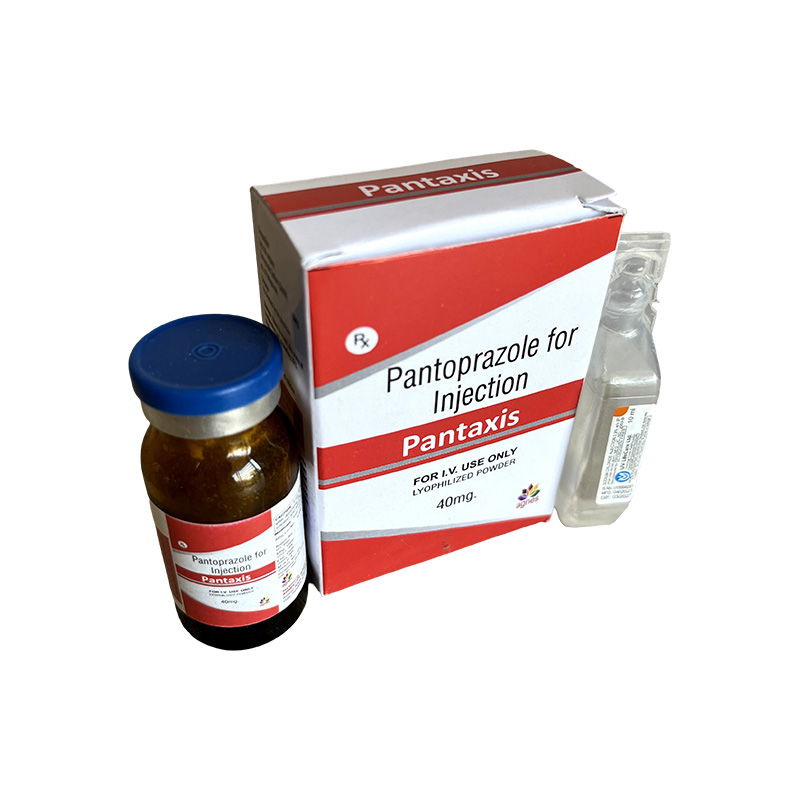
PANTAXIS
COMPOSITION
Pantoprazole 40 mg (Injection)
Category
Antacid, Proton Pump Inhibitor
| Packing |
|---|
SKU
ee4be20ad5c0
Categories AGNES, INJECTABLES, Injection
ENQUIRY
Indications
PANTAXIS is a pantoprazole injection used in hospitals to reduce the amount of acid the stomach produces. Pantoprazole belongs to a group of medicines called proton pump inhibitors — or PPIs.
It is one of the most commonly prescribed acid-reducing medicines in India, and the injectable form is used specifically when a patient cannot take tablets by mouth or when the condition needs faster control than an oral medicine can provide. It is prescribed for:
GERD (Acid Reflux Disease): When stomach acid keeps flowing back up into the food pipe and causes burning, chest discomfort, and damage to the food pipe lining, PANTAXIS is used to reduce that acid quickly. The injection is particularly helpful when symptoms are severe and need fast relief.
Erosive Esophagitis: This is a condition where the inner lining of the food pipe gets damaged and inflamed due to repeated acid exposure. PANTAXIS reduces the acid that is causing the damage, giving the lining time to heal properly.
Stress Ulcer Prevention in ICU Patients: Patients who are critically ill, on ventilators, or recovering from major trauma or surgery are at high risk of developing stress ulcers in the stomach. These ulcers happen because the body, under extreme physical stress, starts producing more acid than normal. PANTAXIS is given in ICUs specifically to prevent this from happening.
Peptic Ulcers (Stomach and Duodenal Ulcers): Used in the treatment and healing of active ulcers in the stomach and the upper part of the small intestine. By lowering acid levels, it gives the ulcer surface a proper chance to recover.
Upper GI Bleeding: When a patient is admitted with bleeding from the food pipe, stomach, or upper intestine, controlling acid is one of the first things doctors do. PANTAXIS helps by reducing the acid that prevents blood clots from forming properly at the bleeding site.
Used Alongside NSAIDs: Patients who are on regular pain killers or anti-inflammatory medicines — like Diclofenac, ibuprofen, or aspirin — are at risk of developing stomach irritation and ulcers. PANTAXIS is often prescribed alongside these medicines to protect the stomach lining.
Zollinger-Ellison Syndrome: A rare condition where a tumour causes the stomach to produce dangerously high amounts of acid. Pantoprazole is one of the medicines used to bring that acid under control in such patients.
Post-Operative Acid Control: After surgeries — especially abdominal or gastrointestinal procedures — the stomach needs protection while the patient is recovering and not yet eating normally. PANTAXIS is given during this period to keep acid levels low and prevent complications.
It is one of the most commonly prescribed acid-reducing medicines in India, and the injectable form is used specifically when a patient cannot take tablets by mouth or when the condition needs faster control than an oral medicine can provide. It is prescribed for:
GERD (Acid Reflux Disease): When stomach acid keeps flowing back up into the food pipe and causes burning, chest discomfort, and damage to the food pipe lining, PANTAXIS is used to reduce that acid quickly. The injection is particularly helpful when symptoms are severe and need fast relief.
Erosive Esophagitis: This is a condition where the inner lining of the food pipe gets damaged and inflamed due to repeated acid exposure. PANTAXIS reduces the acid that is causing the damage, giving the lining time to heal properly.
Stress Ulcer Prevention in ICU Patients: Patients who are critically ill, on ventilators, or recovering from major trauma or surgery are at high risk of developing stress ulcers in the stomach. These ulcers happen because the body, under extreme physical stress, starts producing more acid than normal. PANTAXIS is given in ICUs specifically to prevent this from happening.
Peptic Ulcers (Stomach and Duodenal Ulcers): Used in the treatment and healing of active ulcers in the stomach and the upper part of the small intestine. By lowering acid levels, it gives the ulcer surface a proper chance to recover.
Upper GI Bleeding: When a patient is admitted with bleeding from the food pipe, stomach, or upper intestine, controlling acid is one of the first things doctors do. PANTAXIS helps by reducing the acid that prevents blood clots from forming properly at the bleeding site.
Used Alongside NSAIDs: Patients who are on regular pain killers or anti-inflammatory medicines — like Diclofenac, ibuprofen, or aspirin — are at risk of developing stomach irritation and ulcers. PANTAXIS is often prescribed alongside these medicines to protect the stomach lining.
Zollinger-Ellison Syndrome: A rare condition where a tumour causes the stomach to produce dangerously high amounts of acid. Pantoprazole is one of the medicines used to bring that acid under control in such patients.
Post-Operative Acid Control: After surgeries — especially abdominal or gastrointestinal procedures — the stomach needs protection while the patient is recovering and not yet eating normally. PANTAXIS is given during this period to keep acid levels low and prevent complications.
Uses
PANTAXIS works by blocking what are called proton pumps in the stomach lining. These are tiny structures inside the cells that line the stomach, and their only job is to push acid into the stomach.
Pantoprazole enters these cells, binds to the proton pumps, and switches them off. Once the pumps are blocked, the stomach stops producing as much acid — giving the gut lining the relief it needs to heal. As an injection, it reaches the bloodstream directly and starts working faster than a tablet would.
Treats GERD and Erosive Esophagitis: Reduces the acid that flows back into the food pipe, allowing the damaged lining to recover and stopping the burning and discomfort that GERD patients experience daily.
Prevents Stress Ulcers in the ICU: One of its most important uses in Indian hospitals — critically ill patients are highly vulnerable to stomach ulcers. Regular doses of PANTAXIS prevent acid from damaging the already stressed stomach lining in these patients.
Reduces Gastric Acid Secretion Fast: Because it is given directly through a vein, the injectable form acts faster than oral tablets. This speed matters in emergency situations — bleeding ulcers, acute GERD flares, or post-operative care, where waiting for a tablet to work is not an option.
Used with NSAIDs: Pain killers and anti-inflammatory medicines are very widely used in India — for arthritis, back pain, fever, dental pain, and many other conditions. These medicines are known to irritate the stomach. PANTAXIS acts as a protector, reducing the acid and inflammation that these medicines trigger.
Quick IV Action: The direct IV route means Pantoprazole starts working within minutes. In a hospital setting where conditions can change quickly, this speed of action is genuinely valuable.
Heals Stomach and Intestinal Ulcers: Lower acid levels create the right environment for ulcers to heal on their own. PANTAXIS does not repair the ulcer directly — it controls the acid that is stopping it from healing.
Pantoprazole enters these cells, binds to the proton pumps, and switches them off. Once the pumps are blocked, the stomach stops producing as much acid — giving the gut lining the relief it needs to heal. As an injection, it reaches the bloodstream directly and starts working faster than a tablet would.
Treats GERD and Erosive Esophagitis: Reduces the acid that flows back into the food pipe, allowing the damaged lining to recover and stopping the burning and discomfort that GERD patients experience daily.
Prevents Stress Ulcers in the ICU: One of its most important uses in Indian hospitals — critically ill patients are highly vulnerable to stomach ulcers. Regular doses of PANTAXIS prevent acid from damaging the already stressed stomach lining in these patients.
Reduces Gastric Acid Secretion Fast: Because it is given directly through a vein, the injectable form acts faster than oral tablets. This speed matters in emergency situations — bleeding ulcers, acute GERD flares, or post-operative care, where waiting for a tablet to work is not an option.
Used with NSAIDs: Pain killers and anti-inflammatory medicines are very widely used in India — for arthritis, back pain, fever, dental pain, and many other conditions. These medicines are known to irritate the stomach. PANTAXIS acts as a protector, reducing the acid and inflammation that these medicines trigger.
Quick IV Action: The direct IV route means Pantoprazole starts working within minutes. In a hospital setting where conditions can change quickly, this speed of action is genuinely valuable.
Heals Stomach and Intestinal Ulcers: Lower acid levels create the right environment for ulcers to heal on their own. PANTAXIS does not repair the ulcer directly — it controls the acid that is stopping it from healing.
Dosage & Storage
Dosage: The dose is always decided by the treating doctor based on what condition is being treated, how serious it is, and the patient’s overall health and kidney or liver function. The standard adult dose is 40mg given once or twice daily through an IV drip.
How It Is Given: As a slow intravenous (IV) infusion, diluted in a suitable IV fluid and given over 15 minutes. Must never be given as a direct rapid push into the vein undiluted.
Reconstitution: PANTAXIS is a lyophilized (freeze-dried) powder in a vial. It is first dissolved in the provided diluent and then diluted further in an IV bag before being given. The hospital pharmacy or nursing team handles this preparation.
Storage: Store the dry vial at room temperature between 15°C and 30°C in a cool, dry place away from direct sunlight and moisture.
Light Sensitive: Pantoprazole is sensitive to light. Keep the vial in its original packaging and away from direct sunlight at all times until it is ready to be used.
After Reconstitution: Use the prepared solution within the recommended time frame. Do not prepare it ahead of time and leave it sitting.
Single Use: Each vial is for one-time use only. Discard any remaining solution after the dose has been given. Keep Out of Reach: Store safely away from children and pets at all times.
How It Is Given: As a slow intravenous (IV) infusion, diluted in a suitable IV fluid and given over 15 minutes. Must never be given as a direct rapid push into the vein undiluted.
Reconstitution: PANTAXIS is a lyophilized (freeze-dried) powder in a vial. It is first dissolved in the provided diluent and then diluted further in an IV bag before being given. The hospital pharmacy or nursing team handles this preparation.
Storage: Store the dry vial at room temperature between 15°C and 30°C in a cool, dry place away from direct sunlight and moisture.
Light Sensitive: Pantoprazole is sensitive to light. Keep the vial in its original packaging and away from direct sunlight at all times until it is ready to be used.
After Reconstitution: Use the prepared solution within the recommended time frame. Do not prepare it ahead of time and leave it sitting.
Single Use: Each vial is for one-time use only. Discard any remaining solution after the dose has been given. Keep Out of Reach: Store safely away from children and pets at all times.
Directions For Use
Hospital Use Only: PANTAXIS must be prepared and given inside a hospital or clinic by a qualified doctor or nurse. It is not for use at home.
Never Self-Administer: This injection should never be prepared or given by the patient themselves. It must always be administered by a trained healthcare professional.
Always Dilute Before Use: The vial powder must be dissolved and diluted before it is given into the vein. Never give it as a direct undiluted IV push — this can cause serious reactions.
Infuse Slowly: The prepared solution should be given as a slow drip over the recommended time period — usually 15 minutes. Rushing the infusion increases the risk of side effects.
Check Before Use: After dissolving the powder, the solution should be clear and yellowish. If it looks cloudy, has particles floating in it, or appears discoloured in an unusual way, do not use it.
Stick to the Prescribed Course: Do not stop PANTAXIS on your own even if you feel better quickly. The doctor will decide when the injection can be stopped and whether to switch to an oral PPI tablet to continue treatment.
Transition to Oral Tablet: Once the patient is stable and able to swallow medicines, the doctor will usually switch from the injection to an oral Pantoprazole tablet to continue and complete the treatment.
Missed Dose: If a hospital dose is delayed or skipped, inform the nurse or doctor right away. Never give two doses together to make up for a missed one.
Never Self-Administer: This injection should never be prepared or given by the patient themselves. It must always be administered by a trained healthcare professional.
Always Dilute Before Use: The vial powder must be dissolved and diluted before it is given into the vein. Never give it as a direct undiluted IV push — this can cause serious reactions.
Infuse Slowly: The prepared solution should be given as a slow drip over the recommended time period — usually 15 minutes. Rushing the infusion increases the risk of side effects.
Check Before Use: After dissolving the powder, the solution should be clear and yellowish. If it looks cloudy, has particles floating in it, or appears discoloured in an unusual way, do not use it.
Stick to the Prescribed Course: Do not stop PANTAXIS on your own even if you feel better quickly. The doctor will decide when the injection can be stopped and whether to switch to an oral PPI tablet to continue treatment.
Transition to Oral Tablet: Once the patient is stable and able to swallow medicines, the doctor will usually switch from the injection to an oral Pantoprazole tablet to continue and complete the treatment.
Missed Dose: If a hospital dose is delayed or skipped, inform the nurse or doctor right away. Never give two doses together to make up for a missed one.
Precautions
Before starting PANTAXIS, the doctor must know the following:
Allergy to PPIs: Do not use if the patient has had a reaction to Pantoprazole or any other proton pump inhibitor — Omeprazole, Rabeprazole, Esomeprazole, or Lansoprazole. Share the full allergy history before treatment begins.
Liver Disease: Pantoprazole is processed by the liver. Patients with severe liver problems may need a lower dose and regular monitoring of liver function during the course.
Low Magnesium Levels: Long-term use of proton pump inhibitors can gradually bring down magnesium levels in the blood. Your doctor may check blood magnesium levels if the treatment continues for a long time. Low magnesium can cause muscle cramps, irregular heartbeat, and weakness.
Bone Health: Extended use of PPIs over months and years is associated with a small increase in the risk of bone fractures — particularly in older patients or those with weak bones. The doctor will factor this in for patients on long-term treatment.
Vitamin B12 Levels: Reducing stomach acid for a prolonged period can make it harder for the body to absorb Vitamin B12 from food. Long-term patients may need B12 levels checked periodically.
Gut Infections: Lowering stomach acid for a long period slightly raises the risk of certain bacterial gut infections. Any unusual or persistent diarrhea during or after the course should be reported to the doctor.
Pregnancy and Breastfeeding: Use only if clearly needed and as prescribed by the doctor. The risks and benefits should be discussed properly before starting.
Other Medicines: Tell the doctor about all medicines the patient is currently taking — especially blood thinners like Warfarin, antifungal medicines like Ketoconazole, HIV medicines like Atazanavir, or Methotrexate — as Pantoprazole can affect how some of these medicines work in the body.
Osteoporosis Risk: Patients who already have osteoporosis or are at risk of it should inform their doctor, as long-term acid suppression may contribute to bone loss over time.
Allergy to PPIs: Do not use if the patient has had a reaction to Pantoprazole or any other proton pump inhibitor — Omeprazole, Rabeprazole, Esomeprazole, or Lansoprazole. Share the full allergy history before treatment begins.
Liver Disease: Pantoprazole is processed by the liver. Patients with severe liver problems may need a lower dose and regular monitoring of liver function during the course.
Low Magnesium Levels: Long-term use of proton pump inhibitors can gradually bring down magnesium levels in the blood. Your doctor may check blood magnesium levels if the treatment continues for a long time. Low magnesium can cause muscle cramps, irregular heartbeat, and weakness.
Bone Health: Extended use of PPIs over months and years is associated with a small increase in the risk of bone fractures — particularly in older patients or those with weak bones. The doctor will factor this in for patients on long-term treatment.
Vitamin B12 Levels: Reducing stomach acid for a prolonged period can make it harder for the body to absorb Vitamin B12 from food. Long-term patients may need B12 levels checked periodically.
Gut Infections: Lowering stomach acid for a long period slightly raises the risk of certain bacterial gut infections. Any unusual or persistent diarrhea during or after the course should be reported to the doctor.
Pregnancy and Breastfeeding: Use only if clearly needed and as prescribed by the doctor. The risks and benefits should be discussed properly before starting.
Other Medicines: Tell the doctor about all medicines the patient is currently taking — especially blood thinners like Warfarin, antifungal medicines like Ketoconazole, HIV medicines like Atazanavir, or Methotrexate — as Pantoprazole can affect how some of these medicines work in the body.
Osteoporosis Risk: Patients who already have osteoporosis or are at risk of it should inform their doctor, as long-term acid suppression may contribute to bone loss over time.
Side Effects
Headache
Nausea
Flatulence
Injection site reaction
Constipation
Nausea
Flatulence
Injection site reaction
Constipation
Medical Disclaimer
The information provided is for educational and informational purposes only and is not intended as medical advice.
Always consult a healthcare professional for medical advice, diagnosis, or treatment.
Agnes Life Sciences does not claim that any of its products can diagnose, treat, cure or prevent any disease.
Always consult a healthcare professional for medical advice, diagnosis, or treatment.
Agnes Life Sciences does not claim that any of its products can diagnose, treat, cure or prevent any disease.
Indications
PANTAXIS is a pantoprazole injection used in hospitals to reduce the amount of acid the stomach produces. Pantoprazole belongs to a group of medicines called proton pump inhibitors — or PPIs.
It is one of the most commonly prescribed acid-reducing medicines in India, and the injectable form is used specifically when a patient cannot take tablets by mouth or when the condition needs faster control than an oral medicine can provide. It is prescribed for:
GERD (Acid Reflux Disease): When stomach acid keeps flowing back up into the food pipe and causes burning, chest discomfort, and damage to the food pipe lining, PANTAXIS is used to reduce that acid quickly. The injection is particularly helpful when symptoms are severe and need fast relief.
Erosive Esophagitis: This is a condition where the inner lining of the food pipe gets damaged and inflamed due to repeated acid exposure. PANTAXIS reduces the acid that is causing the damage, giving the lining time to heal properly.
Stress Ulcer Prevention in ICU Patients: Patients who are critically ill, on ventilators, or recovering from major trauma or surgery are at high risk of developing stress ulcers in the stomach. These ulcers happen because the body, under extreme physical stress, starts producing more acid than normal. PANTAXIS is given in ICUs specifically to prevent this from happening.
Peptic Ulcers (Stomach and Duodenal Ulcers): Used in the treatment and healing of active ulcers in the stomach and the upper part of the small intestine. By lowering acid levels, it gives the ulcer surface a proper chance to recover.
Upper GI Bleeding: When a patient is admitted with bleeding from the food pipe, stomach, or upper intestine, controlling acid is one of the first things doctors do. PANTAXIS helps by reducing the acid that prevents blood clots from forming properly at the bleeding site.
Used Alongside NSAIDs: Patients who are on regular pain killers or anti-inflammatory medicines — like Diclofenac, ibuprofen, or aspirin — are at risk of developing stomach irritation and ulcers. PANTAXIS is often prescribed alongside these medicines to protect the stomach lining.
Zollinger-Ellison Syndrome: A rare condition where a tumour causes the stomach to produce dangerously high amounts of acid. Pantoprazole is one of the medicines used to bring that acid under control in such patients.
Post-Operative Acid Control: After surgeries — especially abdominal or gastrointestinal procedures — the stomach needs protection while the patient is recovering and not yet eating normally. PANTAXIS is given during this period to keep acid levels low and prevent complications.
It is one of the most commonly prescribed acid-reducing medicines in India, and the injectable form is used specifically when a patient cannot take tablets by mouth or when the condition needs faster control than an oral medicine can provide. It is prescribed for:
GERD (Acid Reflux Disease): When stomach acid keeps flowing back up into the food pipe and causes burning, chest discomfort, and damage to the food pipe lining, PANTAXIS is used to reduce that acid quickly. The injection is particularly helpful when symptoms are severe and need fast relief.
Erosive Esophagitis: This is a condition where the inner lining of the food pipe gets damaged and inflamed due to repeated acid exposure. PANTAXIS reduces the acid that is causing the damage, giving the lining time to heal properly.
Stress Ulcer Prevention in ICU Patients: Patients who are critically ill, on ventilators, or recovering from major trauma or surgery are at high risk of developing stress ulcers in the stomach. These ulcers happen because the body, under extreme physical stress, starts producing more acid than normal. PANTAXIS is given in ICUs specifically to prevent this from happening.
Peptic Ulcers (Stomach and Duodenal Ulcers): Used in the treatment and healing of active ulcers in the stomach and the upper part of the small intestine. By lowering acid levels, it gives the ulcer surface a proper chance to recover.
Upper GI Bleeding: When a patient is admitted with bleeding from the food pipe, stomach, or upper intestine, controlling acid is one of the first things doctors do. PANTAXIS helps by reducing the acid that prevents blood clots from forming properly at the bleeding site.
Used Alongside NSAIDs: Patients who are on regular pain killers or anti-inflammatory medicines — like Diclofenac, ibuprofen, or aspirin — are at risk of developing stomach irritation and ulcers. PANTAXIS is often prescribed alongside these medicines to protect the stomach lining.
Zollinger-Ellison Syndrome: A rare condition where a tumour causes the stomach to produce dangerously high amounts of acid. Pantoprazole is one of the medicines used to bring that acid under control in such patients.
Post-Operative Acid Control: After surgeries — especially abdominal or gastrointestinal procedures — the stomach needs protection while the patient is recovering and not yet eating normally. PANTAXIS is given during this period to keep acid levels low and prevent complications.
Uses
PANTAXIS works by blocking what are called proton pumps in the stomach lining. These are tiny structures inside the cells that line the stomach, and their only job is to push acid into the stomach.
Pantoprazole enters these cells, binds to the proton pumps, and switches them off. Once the pumps are blocked, the stomach stops producing as much acid — giving the gut lining the relief it needs to heal. As an injection, it reaches the bloodstream directly and starts working faster than a tablet would.
Treats GERD and Erosive Esophagitis: Reduces the acid that flows back into the food pipe, allowing the damaged lining to recover and stopping the burning and discomfort that GERD patients experience daily.
Prevents Stress Ulcers in the ICU: One of its most important uses in Indian hospitals — critically ill patients are highly vulnerable to stomach ulcers. Regular doses of PANTAXIS prevent acid from damaging the already stressed stomach lining in these patients.
Reduces Gastric Acid Secretion Fast: Because it is given directly through a vein, the injectable form acts faster than oral tablets. This speed matters in emergency situations — bleeding ulcers, acute GERD flares, or post-operative care, where waiting for a tablet to work is not an option.
Used with NSAIDs: Pain killers and anti-inflammatory medicines are very widely used in India — for arthritis, back pain, fever, dental pain, and many other conditions. These medicines are known to irritate the stomach. PANTAXIS acts as a protector, reducing the acid and inflammation that these medicines trigger.
Quick IV Action: The direct IV route means Pantoprazole starts working within minutes. In a hospital setting where conditions can change quickly, this speed of action is genuinely valuable.
Heals Stomach and Intestinal Ulcers: Lower acid levels create the right environment for ulcers to heal on their own. PANTAXIS does not repair the ulcer directly — it controls the acid that is stopping it from healing.
Pantoprazole enters these cells, binds to the proton pumps, and switches them off. Once the pumps are blocked, the stomach stops producing as much acid — giving the gut lining the relief it needs to heal. As an injection, it reaches the bloodstream directly and starts working faster than a tablet would.
Treats GERD and Erosive Esophagitis: Reduces the acid that flows back into the food pipe, allowing the damaged lining to recover and stopping the burning and discomfort that GERD patients experience daily.
Prevents Stress Ulcers in the ICU: One of its most important uses in Indian hospitals — critically ill patients are highly vulnerable to stomach ulcers. Regular doses of PANTAXIS prevent acid from damaging the already stressed stomach lining in these patients.
Reduces Gastric Acid Secretion Fast: Because it is given directly through a vein, the injectable form acts faster than oral tablets. This speed matters in emergency situations — bleeding ulcers, acute GERD flares, or post-operative care, where waiting for a tablet to work is not an option.
Used with NSAIDs: Pain killers and anti-inflammatory medicines are very widely used in India — for arthritis, back pain, fever, dental pain, and many other conditions. These medicines are known to irritate the stomach. PANTAXIS acts as a protector, reducing the acid and inflammation that these medicines trigger.
Quick IV Action: The direct IV route means Pantoprazole starts working within minutes. In a hospital setting where conditions can change quickly, this speed of action is genuinely valuable.
Heals Stomach and Intestinal Ulcers: Lower acid levels create the right environment for ulcers to heal on their own. PANTAXIS does not repair the ulcer directly — it controls the acid that is stopping it from healing.
Dosage & Storage
Dosage: The dose is always decided by the treating doctor based on what condition is being treated, how serious it is, and the patient’s overall health and kidney or liver function. The standard adult dose is 40mg given once or twice daily through an IV drip.
How It Is Given: As a slow intravenous (IV) infusion, diluted in a suitable IV fluid and given over 15 minutes. Must never be given as a direct rapid push into the vein undiluted.
Reconstitution: PANTAXIS is a lyophilized (freeze-dried) powder in a vial. It is first dissolved in the provided diluent and then diluted further in an IV bag before being given. The hospital pharmacy or nursing team handles this preparation.
Storage: Store the dry vial at room temperature between 15°C and 30°C in a cool, dry place away from direct sunlight and moisture.
Light Sensitive: Pantoprazole is sensitive to light. Keep the vial in its original packaging and away from direct sunlight at all times until it is ready to be used.
After Reconstitution: Use the prepared solution within the recommended time frame. Do not prepare it ahead of time and leave it sitting.
Single Use: Each vial is for one-time use only. Discard any remaining solution after the dose has been given. Keep Out of Reach: Store safely away from children and pets at all times.
How It Is Given: As a slow intravenous (IV) infusion, diluted in a suitable IV fluid and given over 15 minutes. Must never be given as a direct rapid push into the vein undiluted.
Reconstitution: PANTAXIS is a lyophilized (freeze-dried) powder in a vial. It is first dissolved in the provided diluent and then diluted further in an IV bag before being given. The hospital pharmacy or nursing team handles this preparation.
Storage: Store the dry vial at room temperature between 15°C and 30°C in a cool, dry place away from direct sunlight and moisture.
Light Sensitive: Pantoprazole is sensitive to light. Keep the vial in its original packaging and away from direct sunlight at all times until it is ready to be used.
After Reconstitution: Use the prepared solution within the recommended time frame. Do not prepare it ahead of time and leave it sitting.
Single Use: Each vial is for one-time use only. Discard any remaining solution after the dose has been given. Keep Out of Reach: Store safely away from children and pets at all times.
Directions For Use
Hospital Use Only: PANTAXIS must be prepared and given inside a hospital or clinic by a qualified doctor or nurse. It is not for use at home.
Never Self-Administer: This injection should never be prepared or given by the patient themselves. It must always be administered by a trained healthcare professional.
Always Dilute Before Use: The vial powder must be dissolved and diluted before it is given into the vein. Never give it as a direct undiluted IV push — this can cause serious reactions.
Infuse Slowly: The prepared solution should be given as a slow drip over the recommended time period — usually 15 minutes. Rushing the infusion increases the risk of side effects.
Check Before Use: After dissolving the powder, the solution should be clear and yellowish. If it looks cloudy, has particles floating in it, or appears discoloured in an unusual way, do not use it.
Stick to the Prescribed Course: Do not stop PANTAXIS on your own even if you feel better quickly. The doctor will decide when the injection can be stopped and whether to switch to an oral PPI tablet to continue treatment.
Transition to Oral Tablet: Once the patient is stable and able to swallow medicines, the doctor will usually switch from the injection to an oral Pantoprazole tablet to continue and complete the treatment.
Missed Dose: If a hospital dose is delayed or skipped, inform the nurse or doctor right away. Never give two doses together to make up for a missed one.
Never Self-Administer: This injection should never be prepared or given by the patient themselves. It must always be administered by a trained healthcare professional.
Always Dilute Before Use: The vial powder must be dissolved and diluted before it is given into the vein. Never give it as a direct undiluted IV push — this can cause serious reactions.
Infuse Slowly: The prepared solution should be given as a slow drip over the recommended time period — usually 15 minutes. Rushing the infusion increases the risk of side effects.
Check Before Use: After dissolving the powder, the solution should be clear and yellowish. If it looks cloudy, has particles floating in it, or appears discoloured in an unusual way, do not use it.
Stick to the Prescribed Course: Do not stop PANTAXIS on your own even if you feel better quickly. The doctor will decide when the injection can be stopped and whether to switch to an oral PPI tablet to continue treatment.
Transition to Oral Tablet: Once the patient is stable and able to swallow medicines, the doctor will usually switch from the injection to an oral Pantoprazole tablet to continue and complete the treatment.
Missed Dose: If a hospital dose is delayed or skipped, inform the nurse or doctor right away. Never give two doses together to make up for a missed one.
Precautions
Before starting PANTAXIS, the doctor must know the following:
Allergy to PPIs: Do not use if the patient has had a reaction to Pantoprazole or any other proton pump inhibitor — Omeprazole, Rabeprazole, Esomeprazole, or Lansoprazole. Share the full allergy history before treatment begins.
Liver Disease: Pantoprazole is processed by the liver. Patients with severe liver problems may need a lower dose and regular monitoring of liver function during the course.
Low Magnesium Levels: Long-term use of proton pump inhibitors can gradually bring down magnesium levels in the blood. Your doctor may check blood magnesium levels if the treatment continues for a long time. Low magnesium can cause muscle cramps, irregular heartbeat, and weakness.
Bone Health: Extended use of PPIs over months and years is associated with a small increase in the risk of bone fractures — particularly in older patients or those with weak bones. The doctor will factor this in for patients on long-term treatment.
Vitamin B12 Levels: Reducing stomach acid for a prolonged period can make it harder for the body to absorb Vitamin B12 from food. Long-term patients may need B12 levels checked periodically.
Gut Infections: Lowering stomach acid for a long period slightly raises the risk of certain bacterial gut infections. Any unusual or persistent diarrhea during or after the course should be reported to the doctor.
Pregnancy and Breastfeeding: Use only if clearly needed and as prescribed by the doctor. The risks and benefits should be discussed properly before starting.
Other Medicines: Tell the doctor about all medicines the patient is currently taking — especially blood thinners like Warfarin, antifungal medicines like Ketoconazole, HIV medicines like Atazanavir, or Methotrexate — as Pantoprazole can affect how some of these medicines work in the body.
Osteoporosis Risk: Patients who already have osteoporosis or are at risk of it should inform their doctor, as long-term acid suppression may contribute to bone loss over time.
Allergy to PPIs: Do not use if the patient has had a reaction to Pantoprazole or any other proton pump inhibitor — Omeprazole, Rabeprazole, Esomeprazole, or Lansoprazole. Share the full allergy history before treatment begins.
Liver Disease: Pantoprazole is processed by the liver. Patients with severe liver problems may need a lower dose and regular monitoring of liver function during the course.
Low Magnesium Levels: Long-term use of proton pump inhibitors can gradually bring down magnesium levels in the blood. Your doctor may check blood magnesium levels if the treatment continues for a long time. Low magnesium can cause muscle cramps, irregular heartbeat, and weakness.
Bone Health: Extended use of PPIs over months and years is associated with a small increase in the risk of bone fractures — particularly in older patients or those with weak bones. The doctor will factor this in for patients on long-term treatment.
Vitamin B12 Levels: Reducing stomach acid for a prolonged period can make it harder for the body to absorb Vitamin B12 from food. Long-term patients may need B12 levels checked periodically.
Gut Infections: Lowering stomach acid for a long period slightly raises the risk of certain bacterial gut infections. Any unusual or persistent diarrhea during or after the course should be reported to the doctor.
Pregnancy and Breastfeeding: Use only if clearly needed and as prescribed by the doctor. The risks and benefits should be discussed properly before starting.
Other Medicines: Tell the doctor about all medicines the patient is currently taking — especially blood thinners like Warfarin, antifungal medicines like Ketoconazole, HIV medicines like Atazanavir, or Methotrexate — as Pantoprazole can affect how some of these medicines work in the body.
Osteoporosis Risk: Patients who already have osteoporosis or are at risk of it should inform their doctor, as long-term acid suppression may contribute to bone loss over time.
Side Effects
Headache
Nausea
Flatulence
Injection site reaction
Constipation
Nausea
Flatulence
Injection site reaction
Constipation
Medical Disclaimer
The information provided is for educational and informational purposes only and is not intended as medical advice.
Always consult a healthcare professional for medical advice, diagnosis, or treatment.
Agnes Life Sciences does not claim that any of its products can diagnose, treat, cure or prevent any disease.
Always consult a healthcare professional for medical advice, diagnosis, or treatment.
Agnes Life Sciences does not claim that any of its products can diagnose, treat, cure or prevent any disease.