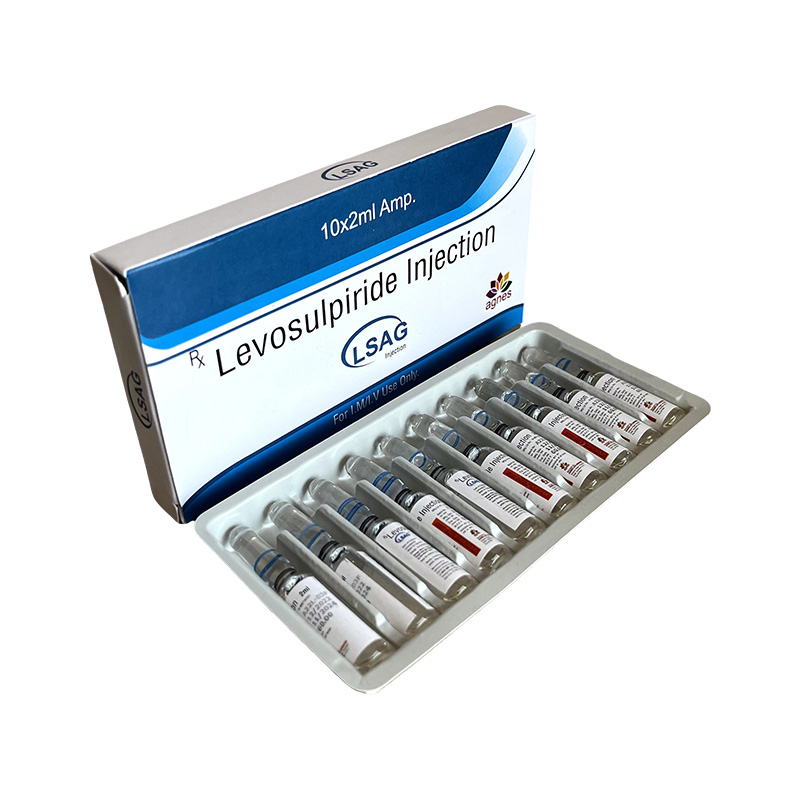
LSAG
COMPOSITION
Levosulpiride 25 mg (2ml Inj)
Category
Prokinetic, Antipsychotic
| Packing |
|---|
SKU
073d10834cab
Categories AGNES, INJECTABLES, Injection
ENQUIRY
Indications
LSAG is an injectable medicine that works on two different systems in the body — the digestive system and the brain. That makes it a bit different from most other injections. In the gut, it helps food move through the stomach faster and more smoothly. In the brain, it works on dopamine receptors to help with certain mood and psychiatric conditions. Because it works as a liquid injection, it acts faster than tablets — making it useful when quick results are needed in a hospital or clinical setting. It is prescribed for:
Delayed Gastric Emptying (Gastroparesis): This is a condition where the stomach takes too long to push food into the small intestine. The patient feels full very quickly, bloated, and often nauseated even after eating very little. Levosulpiride helps the stomach muscles work better and moves food along faster — giving real relief from these symptoms.
GERD (Acid Reflux Disease): When the lower end of the food pipe does not close properly after eating, stomach acid flows back up. Levosulpiride helps improve the movement of food downward and reduces the chances of acid coming back up. It is often used alongside antacids for better control of GERD symptoms.
Functional Dyspepsia: A very common problem in India — patients have ongoing discomfort, bloating, nausea, and a feeling of fullness after meals, but no specific structural problem is found on investigation. Levosulpiride helps by improving how the stomach empties and reducing the sensitivity of the gut to discomfort.
Irritable Bowel Syndrome (IBS): Used in patients with IBS where gut motility — the movement of food and waste through the intestines — is irregular or sluggish. Levosulpiride helps regulate this movement and reduces bloating, cramping, and discomfort.
Nausea and Vomiting: Because it acts on the vomiting centre in the brain and also improves stomach emptying, LSAG is effective in controlling nausea and vomiting — whether the cause is a gut problem, a medicine, or another illness.
Schizophrenia and Psychotic Disorders: At higher doses, Levosulpiride is used as an antipsychotic — it blocks certain dopamine receptors in the brain that are overactive in schizophrenia. The injectable form is particularly useful when a patient is acutely unwell and cannot or will not take oral medicine.
Mood Disorders and Depression with Anxiety: At lower doses, Levosulpiride has been found to help in patients who have mild to moderate depression — especially when it comes along with physical symptoms like gut problems, fatigue, or loss of appetite. It lifts mood while also addressing the physical complaints at the same time.
Gut Motility Problems During Illness: In hospitalised patients who are recovering from surgery or serious illness, the gut sometimes becomes sluggish and stops moving normally — a condition called ileus. LSAG helps restart normal gut movement in these situations.
Delayed Gastric Emptying (Gastroparesis): This is a condition where the stomach takes too long to push food into the small intestine. The patient feels full very quickly, bloated, and often nauseated even after eating very little. Levosulpiride helps the stomach muscles work better and moves food along faster — giving real relief from these symptoms.
GERD (Acid Reflux Disease): When the lower end of the food pipe does not close properly after eating, stomach acid flows back up. Levosulpiride helps improve the movement of food downward and reduces the chances of acid coming back up. It is often used alongside antacids for better control of GERD symptoms.
Functional Dyspepsia: A very common problem in India — patients have ongoing discomfort, bloating, nausea, and a feeling of fullness after meals, but no specific structural problem is found on investigation. Levosulpiride helps by improving how the stomach empties and reducing the sensitivity of the gut to discomfort.
Irritable Bowel Syndrome (IBS): Used in patients with IBS where gut motility — the movement of food and waste through the intestines — is irregular or sluggish. Levosulpiride helps regulate this movement and reduces bloating, cramping, and discomfort.
Nausea and Vomiting: Because it acts on the vomiting centre in the brain and also improves stomach emptying, LSAG is effective in controlling nausea and vomiting — whether the cause is a gut problem, a medicine, or another illness.
Schizophrenia and Psychotic Disorders: At higher doses, Levosulpiride is used as an antipsychotic — it blocks certain dopamine receptors in the brain that are overactive in schizophrenia. The injectable form is particularly useful when a patient is acutely unwell and cannot or will not take oral medicine.
Mood Disorders and Depression with Anxiety: At lower doses, Levosulpiride has been found to help in patients who have mild to moderate depression — especially when it comes along with physical symptoms like gut problems, fatigue, or loss of appetite. It lifts mood while also addressing the physical complaints at the same time.
Gut Motility Problems During Illness: In hospitalised patients who are recovering from surgery or serious illness, the gut sometimes becomes sluggish and stops moving normally — a condition called ileus. LSAG helps restart normal gut movement in these situations.
Uses
LSAG contains Levosulpiride, which belongs to a group of medicines called substituted benzamides. It works by blocking dopamine D2 receptors. Now, dopamine receptors are found in two main places in the body — the gut and the brain. In the gut, dopamine normally slows down muscle movement.
When Levosulpiride blocks it, the gut muscles become more active, food moves through faster, and symptoms like bloating, fullness, and nausea reduce. In the brain, blocking dopamine receptors in specific areas reduces psychotic symptoms and also has a mild mood-lifting effect.
Treats Delayed Gastric Emptying and GERD: By blocking the effect of dopamine in the gut wall, Levosulpiride makes the stomach muscles more active — food empties out faster, the chance of acid reflux reduces, and the patient feels much more comfortable after meals.
Helps in Functional Dyspepsia: One of the most practically useful applications — patients who have been suffering from unexplained bloating, nausea, and stomach discomfort for months often see good improvement with Levosulpiride, since it addresses both the gut movement issue and the sensitivity of the gut lining.
Improves Gut Motility: Whether it is gastroparesis, IBS, or post-surgical gut slowdown, Levosulpiride helps get the gut moving again in a controlled and natural way — without causing excessive cramping or urgency.
Helps in Nausea and Vomiting: Works both in the gut and in the brain’s vomiting centre (chemoreceptor trigger zone) — giving it a two-way anti-nausea effect that is stronger than medicines that only work in one place.
Used in Schizophrenia and Mood Disorders: At higher doses, it brings down psychotic symptoms. At lower doses, it helps lift mood and reduce anxiety — particularly in patients who have both psychiatric and gut-related symptoms at the same time. This dual action makes it a practical choice for doctors managing patients with overlapping complaints.
Useful in IBS Management: Regulates the rhythm and speed of gut movement in IBS patients — reducing the unpredictability of symptoms and giving patients more control over their daily routine.
When Levosulpiride blocks it, the gut muscles become more active, food moves through faster, and symptoms like bloating, fullness, and nausea reduce. In the brain, blocking dopamine receptors in specific areas reduces psychotic symptoms and also has a mild mood-lifting effect.
Treats Delayed Gastric Emptying and GERD: By blocking the effect of dopamine in the gut wall, Levosulpiride makes the stomach muscles more active — food empties out faster, the chance of acid reflux reduces, and the patient feels much more comfortable after meals.
Helps in Functional Dyspepsia: One of the most practically useful applications — patients who have been suffering from unexplained bloating, nausea, and stomach discomfort for months often see good improvement with Levosulpiride, since it addresses both the gut movement issue and the sensitivity of the gut lining.
Improves Gut Motility: Whether it is gastroparesis, IBS, or post-surgical gut slowdown, Levosulpiride helps get the gut moving again in a controlled and natural way — without causing excessive cramping or urgency.
Helps in Nausea and Vomiting: Works both in the gut and in the brain’s vomiting centre (chemoreceptor trigger zone) — giving it a two-way anti-nausea effect that is stronger than medicines that only work in one place.
Used in Schizophrenia and Mood Disorders: At higher doses, it brings down psychotic symptoms. At lower doses, it helps lift mood and reduce anxiety — particularly in patients who have both psychiatric and gut-related symptoms at the same time. This dual action makes it a practical choice for doctors managing patients with overlapping complaints.
Useful in IBS Management: Regulates the rhythm and speed of gut movement in IBS patients — reducing the unpredictability of symptoms and giving patients more control over their daily routine.
Dosage & Storage
Dosage: The dose is always worked out by the treating doctor based on what condition is being treated, the severity of symptoms, and the patient’s age, weight, and overall health. The dose used for gut problems is lower than the dose used for psychiatric conditions — the doctor will decide what is right for each patient.
How It Is Given: As an intramuscular (IM) injection by a qualified doctor or nurse in a hospital or clinical setting. It should not be self-administered.
Packing: Available as 2ml ampoules, each containing 25mg of Levosulpiride. Comes in a pack of 10 ampoules.
Storage: Store at room temperature between 15°C and 30°C in a cool, dry place away from direct sunlight and moisture.
Protect from Light: Levosulpiride solution can be affected by prolonged light exposure. Keep ampoules in their original tray or packaging until use.
Do Not Freeze: Do not refrigerate or freeze the ampoules.
Single Use: Each ampoule is for one-time use only. Once opened, use immediately and discard any leftover solution.
Keep Away from Children: Store in a safe place that children and pets cannot reach.
How It Is Given: As an intramuscular (IM) injection by a qualified doctor or nurse in a hospital or clinical setting. It should not be self-administered.
Packing: Available as 2ml ampoules, each containing 25mg of Levosulpiride. Comes in a pack of 10 ampoules.
Storage: Store at room temperature between 15°C and 30°C in a cool, dry place away from direct sunlight and moisture.
Protect from Light: Levosulpiride solution can be affected by prolonged light exposure. Keep ampoules in their original tray or packaging until use.
Do Not Freeze: Do not refrigerate or freeze the ampoules.
Single Use: Each ampoule is for one-time use only. Once opened, use immediately and discard any leftover solution.
Keep Away from Children: Store in a safe place that children and pets cannot reach.
Directions For Use
For Hospital or Clinic Use Only: LSAG should be given in a hospital, clinic, or nursing home by a trained medical professional. It is not meant for home use.
Never Self-Administer: This injection must always be given by a qualified nurse or doctor. Patients should never attempt to inject it themselves at home.
Check the Ampoule Before Use: The solution should be clear and colourless. If it looks cloudy, discoloured, or has particles floating in it, do not use it. Inform the nurse or pharmacist.
Given as an IM Injection: LSAG is typically given into a muscle — usually the upper outer part of the buttock or the thigh — by the nurse or doctor.
Stick to the Prescribed Schedule: Levosulpiride works best when taken regularly at the times prescribed by the doctor. Irregular use reduces its effectiveness, especially for gut motility issues.
Do Not Stop Suddenly: For patients using this injection for psychiatric conditions, do not stop the medicine suddenly without the doctor’s guidance. Stopping abruptly can cause the symptoms to return quickly and may lead to withdrawal effects.
Missed Dose: If a scheduled dose is missed, tell the doctor or nurse right away. Do not give two doses together to make up for a missed one.
Transition to Oral: Once the patient’s condition is stable and they are able to take medicines by mouth, the doctor may switch from the injection to an oral Levosulpiride tablet to continue the treatment.
Never Self-Administer: This injection must always be given by a qualified nurse or doctor. Patients should never attempt to inject it themselves at home.
Check the Ampoule Before Use: The solution should be clear and colourless. If it looks cloudy, discoloured, or has particles floating in it, do not use it. Inform the nurse or pharmacist.
Given as an IM Injection: LSAG is typically given into a muscle — usually the upper outer part of the buttock or the thigh — by the nurse or doctor.
Stick to the Prescribed Schedule: Levosulpiride works best when taken regularly at the times prescribed by the doctor. Irregular use reduces its effectiveness, especially for gut motility issues.
Do Not Stop Suddenly: For patients using this injection for psychiatric conditions, do not stop the medicine suddenly without the doctor’s guidance. Stopping abruptly can cause the symptoms to return quickly and may lead to withdrawal effects.
Missed Dose: If a scheduled dose is missed, tell the doctor or nurse right away. Do not give two doses together to make up for a missed one.
Transition to Oral: Once the patient’s condition is stable and they are able to take medicines by mouth, the doctor may switch from the injection to an oral Levosulpiride tablet to continue the treatment.
Precautions
Prolactin-Sensitive Conditions: Levosulpiride raises prolactin levels in the blood — a hormone produced by the pituitary gland. Patients who have been diagnosed with prolactin-dependent tumours, breast cancer, or certain hormonal conditions should not use this medicine. Tell the doctor about any known hormonal problems before starting.
Parkinson’s Disease: Do not use in patients with Parkinson’s disease. Levosulpiride blocks dopamine receptors, and since Parkinson’s is already a condition of low dopamine activity, this medicine can make the symptoms significantly worse.
Heart Rhythm Problems (QT Prolongation): Levosulpiride can affect the electrical rhythm of the heart in some patients. Those with a history of irregular heartbeat, long QT syndrome, or those on other medicines that affect heart rhythm should inform the doctor before starting.
Kidney Problems: Levosulpiride is mainly removed from the body through the kidneys. Patients with reduced kidney function may need a lower dose to avoid the medicine building up to unsafe levels.
Elderly Patients: Older patients are more sensitive to the side effects of Levosulpiride — especially drowsiness, falls, and movement-related problems. Use with caution and start at a lower dose.
Pregnancy and Breastfeeding: Should only be used during pregnancy or nursing if the doctor clearly considers it necessary after weighing the risks and benefits carefully.
Driving and Operating Machinery: Levosulpiride can cause drowsiness and reduce alertness. Patients should avoid driving or using heavy machinery until they know how the medicine affects them.
Other Medicines: Tell the doctor about all medicines currently being taken — especially other antipsychotics, antidepressants, medicines for heart rhythm, or any medicines that cause drowsiness — as Levosulpiride may interact with several of them.
Alcohol: Avoid alcohol during treatment. Combining alcohol with Levosulpiride can increase drowsiness and reduce the effectiveness of the medicine.
Parkinson’s Disease: Do not use in patients with Parkinson’s disease. Levosulpiride blocks dopamine receptors, and since Parkinson’s is already a condition of low dopamine activity, this medicine can make the symptoms significantly worse.
Heart Rhythm Problems (QT Prolongation): Levosulpiride can affect the electrical rhythm of the heart in some patients. Those with a history of irregular heartbeat, long QT syndrome, or those on other medicines that affect heart rhythm should inform the doctor before starting.
Kidney Problems: Levosulpiride is mainly removed from the body through the kidneys. Patients with reduced kidney function may need a lower dose to avoid the medicine building up to unsafe levels.
Elderly Patients: Older patients are more sensitive to the side effects of Levosulpiride — especially drowsiness, falls, and movement-related problems. Use with caution and start at a lower dose.
Pregnancy and Breastfeeding: Should only be used during pregnancy or nursing if the doctor clearly considers it necessary after weighing the risks and benefits carefully.
Driving and Operating Machinery: Levosulpiride can cause drowsiness and reduce alertness. Patients should avoid driving or using heavy machinery until they know how the medicine affects them.
Other Medicines: Tell the doctor about all medicines currently being taken — especially other antipsychotics, antidepressants, medicines for heart rhythm, or any medicines that cause drowsiness — as Levosulpiride may interact with several of them.
Alcohol: Avoid alcohol during treatment. Combining alcohol with Levosulpiride can increase drowsiness and reduce the effectiveness of the medicine.
Side Effects
Drowsiness
Restlessness
Hyperprolactinemia
Tremors
Injection site irritation
Restlessness
Hyperprolactinemia
Tremors
Injection site irritation
Medical Disclaimer
The information given here is only for general understanding and educational purposes. It is not meant to replace the advice of a qualified doctor.
LSAG is a prescription-only injectable medicine and must always be used under the direct supervision of a licensed medical professional in a proper clinical setting.
Agnes Life Sciences does not claim that this or any of its products can diagnose, treat, cure, or prevent any disease. For the right diagnosis and treatment plan suited to your condition, always consult your doctor directly.
LSAG is a prescription-only injectable medicine and must always be used under the direct supervision of a licensed medical professional in a proper clinical setting.
Agnes Life Sciences does not claim that this or any of its products can diagnose, treat, cure, or prevent any disease. For the right diagnosis and treatment plan suited to your condition, always consult your doctor directly.
Indications
LSAG is an injectable medicine that works on two different systems in the body — the digestive system and the brain. That makes it a bit different from most other injections. In the gut, it helps food move through the stomach faster and more smoothly. In the brain, it works on dopamine receptors to help with certain mood and psychiatric conditions. Because it works as a liquid injection, it acts faster than tablets — making it useful when quick results are needed in a hospital or clinical setting. It is prescribed for:
Delayed Gastric Emptying (Gastroparesis): This is a condition where the stomach takes too long to push food into the small intestine. The patient feels full very quickly, bloated, and often nauseated even after eating very little. Levosulpiride helps the stomach muscles work better and moves food along faster — giving real relief from these symptoms.
GERD (Acid Reflux Disease): When the lower end of the food pipe does not close properly after eating, stomach acid flows back up. Levosulpiride helps improve the movement of food downward and reduces the chances of acid coming back up. It is often used alongside antacids for better control of GERD symptoms.
Functional Dyspepsia: A very common problem in India — patients have ongoing discomfort, bloating, nausea, and a feeling of fullness after meals, but no specific structural problem is found on investigation. Levosulpiride helps by improving how the stomach empties and reducing the sensitivity of the gut to discomfort.
Irritable Bowel Syndrome (IBS): Used in patients with IBS where gut motility — the movement of food and waste through the intestines — is irregular or sluggish. Levosulpiride helps regulate this movement and reduces bloating, cramping, and discomfort.
Nausea and Vomiting: Because it acts on the vomiting centre in the brain and also improves stomach emptying, LSAG is effective in controlling nausea and vomiting — whether the cause is a gut problem, a medicine, or another illness.
Schizophrenia and Psychotic Disorders: At higher doses, Levosulpiride is used as an antipsychotic — it blocks certain dopamine receptors in the brain that are overactive in schizophrenia. The injectable form is particularly useful when a patient is acutely unwell and cannot or will not take oral medicine.
Mood Disorders and Depression with Anxiety: At lower doses, Levosulpiride has been found to help in patients who have mild to moderate depression — especially when it comes along with physical symptoms like gut problems, fatigue, or loss of appetite. It lifts mood while also addressing the physical complaints at the same time.
Gut Motility Problems During Illness: In hospitalised patients who are recovering from surgery or serious illness, the gut sometimes becomes sluggish and stops moving normally — a condition called ileus. LSAG helps restart normal gut movement in these situations.
Delayed Gastric Emptying (Gastroparesis): This is a condition where the stomach takes too long to push food into the small intestine. The patient feels full very quickly, bloated, and often nauseated even after eating very little. Levosulpiride helps the stomach muscles work better and moves food along faster — giving real relief from these symptoms.
GERD (Acid Reflux Disease): When the lower end of the food pipe does not close properly after eating, stomach acid flows back up. Levosulpiride helps improve the movement of food downward and reduces the chances of acid coming back up. It is often used alongside antacids for better control of GERD symptoms.
Functional Dyspepsia: A very common problem in India — patients have ongoing discomfort, bloating, nausea, and a feeling of fullness after meals, but no specific structural problem is found on investigation. Levosulpiride helps by improving how the stomach empties and reducing the sensitivity of the gut to discomfort.
Irritable Bowel Syndrome (IBS): Used in patients with IBS where gut motility — the movement of food and waste through the intestines — is irregular or sluggish. Levosulpiride helps regulate this movement and reduces bloating, cramping, and discomfort.
Nausea and Vomiting: Because it acts on the vomiting centre in the brain and also improves stomach emptying, LSAG is effective in controlling nausea and vomiting — whether the cause is a gut problem, a medicine, or another illness.
Schizophrenia and Psychotic Disorders: At higher doses, Levosulpiride is used as an antipsychotic — it blocks certain dopamine receptors in the brain that are overactive in schizophrenia. The injectable form is particularly useful when a patient is acutely unwell and cannot or will not take oral medicine.
Mood Disorders and Depression with Anxiety: At lower doses, Levosulpiride has been found to help in patients who have mild to moderate depression — especially when it comes along with physical symptoms like gut problems, fatigue, or loss of appetite. It lifts mood while also addressing the physical complaints at the same time.
Gut Motility Problems During Illness: In hospitalised patients who are recovering from surgery or serious illness, the gut sometimes becomes sluggish and stops moving normally — a condition called ileus. LSAG helps restart normal gut movement in these situations.
Uses
LSAG contains Levosulpiride, which belongs to a group of medicines called substituted benzamides. It works by blocking dopamine D2 receptors. Now, dopamine receptors are found in two main places in the body — the gut and the brain. In the gut, dopamine normally slows down muscle movement.
When Levosulpiride blocks it, the gut muscles become more active, food moves through faster, and symptoms like bloating, fullness, and nausea reduce. In the brain, blocking dopamine receptors in specific areas reduces psychotic symptoms and also has a mild mood-lifting effect.
Treats Delayed Gastric Emptying and GERD: By blocking the effect of dopamine in the gut wall, Levosulpiride makes the stomach muscles more active — food empties out faster, the chance of acid reflux reduces, and the patient feels much more comfortable after meals.
Helps in Functional Dyspepsia: One of the most practically useful applications — patients who have been suffering from unexplained bloating, nausea, and stomach discomfort for months often see good improvement with Levosulpiride, since it addresses both the gut movement issue and the sensitivity of the gut lining.
Improves Gut Motility: Whether it is gastroparesis, IBS, or post-surgical gut slowdown, Levosulpiride helps get the gut moving again in a controlled and natural way — without causing excessive cramping or urgency.
Helps in Nausea and Vomiting: Works both in the gut and in the brain’s vomiting centre (chemoreceptor trigger zone) — giving it a two-way anti-nausea effect that is stronger than medicines that only work in one place.
Used in Schizophrenia and Mood Disorders: At higher doses, it brings down psychotic symptoms. At lower doses, it helps lift mood and reduce anxiety — particularly in patients who have both psychiatric and gut-related symptoms at the same time. This dual action makes it a practical choice for doctors managing patients with overlapping complaints.
Useful in IBS Management: Regulates the rhythm and speed of gut movement in IBS patients — reducing the unpredictability of symptoms and giving patients more control over their daily routine.
When Levosulpiride blocks it, the gut muscles become more active, food moves through faster, and symptoms like bloating, fullness, and nausea reduce. In the brain, blocking dopamine receptors in specific areas reduces psychotic symptoms and also has a mild mood-lifting effect.
Treats Delayed Gastric Emptying and GERD: By blocking the effect of dopamine in the gut wall, Levosulpiride makes the stomach muscles more active — food empties out faster, the chance of acid reflux reduces, and the patient feels much more comfortable after meals.
Helps in Functional Dyspepsia: One of the most practically useful applications — patients who have been suffering from unexplained bloating, nausea, and stomach discomfort for months often see good improvement with Levosulpiride, since it addresses both the gut movement issue and the sensitivity of the gut lining.
Improves Gut Motility: Whether it is gastroparesis, IBS, or post-surgical gut slowdown, Levosulpiride helps get the gut moving again in a controlled and natural way — without causing excessive cramping or urgency.
Helps in Nausea and Vomiting: Works both in the gut and in the brain’s vomiting centre (chemoreceptor trigger zone) — giving it a two-way anti-nausea effect that is stronger than medicines that only work in one place.
Used in Schizophrenia and Mood Disorders: At higher doses, it brings down psychotic symptoms. At lower doses, it helps lift mood and reduce anxiety — particularly in patients who have both psychiatric and gut-related symptoms at the same time. This dual action makes it a practical choice for doctors managing patients with overlapping complaints.
Useful in IBS Management: Regulates the rhythm and speed of gut movement in IBS patients — reducing the unpredictability of symptoms and giving patients more control over their daily routine.
Dosage & Storage
Dosage: The dose is always worked out by the treating doctor based on what condition is being treated, the severity of symptoms, and the patient’s age, weight, and overall health. The dose used for gut problems is lower than the dose used for psychiatric conditions — the doctor will decide what is right for each patient.
How It Is Given: As an intramuscular (IM) injection by a qualified doctor or nurse in a hospital or clinical setting. It should not be self-administered.
Packing: Available as 2ml ampoules, each containing 25mg of Levosulpiride. Comes in a pack of 10 ampoules.
Storage: Store at room temperature between 15°C and 30°C in a cool, dry place away from direct sunlight and moisture.
Protect from Light: Levosulpiride solution can be affected by prolonged light exposure. Keep ampoules in their original tray or packaging until use.
Do Not Freeze: Do not refrigerate or freeze the ampoules.
Single Use: Each ampoule is for one-time use only. Once opened, use immediately and discard any leftover solution.
Keep Away from Children: Store in a safe place that children and pets cannot reach.
How It Is Given: As an intramuscular (IM) injection by a qualified doctor or nurse in a hospital or clinical setting. It should not be self-administered.
Packing: Available as 2ml ampoules, each containing 25mg of Levosulpiride. Comes in a pack of 10 ampoules.
Storage: Store at room temperature between 15°C and 30°C in a cool, dry place away from direct sunlight and moisture.
Protect from Light: Levosulpiride solution can be affected by prolonged light exposure. Keep ampoules in their original tray or packaging until use.
Do Not Freeze: Do not refrigerate or freeze the ampoules.
Single Use: Each ampoule is for one-time use only. Once opened, use immediately and discard any leftover solution.
Keep Away from Children: Store in a safe place that children and pets cannot reach.
Directions For Use
For Hospital or Clinic Use Only: LSAG should be given in a hospital, clinic, or nursing home by a trained medical professional. It is not meant for home use.
Never Self-Administer: This injection must always be given by a qualified nurse or doctor. Patients should never attempt to inject it themselves at home.
Check the Ampoule Before Use: The solution should be clear and colourless. If it looks cloudy, discoloured, or has particles floating in it, do not use it. Inform the nurse or pharmacist.
Given as an IM Injection: LSAG is typically given into a muscle — usually the upper outer part of the buttock or the thigh — by the nurse or doctor.
Stick to the Prescribed Schedule: Levosulpiride works best when taken regularly at the times prescribed by the doctor. Irregular use reduces its effectiveness, especially for gut motility issues.
Do Not Stop Suddenly: For patients using this injection for psychiatric conditions, do not stop the medicine suddenly without the doctor’s guidance. Stopping abruptly can cause the symptoms to return quickly and may lead to withdrawal effects.
Missed Dose: If a scheduled dose is missed, tell the doctor or nurse right away. Do not give two doses together to make up for a missed one.
Transition to Oral: Once the patient’s condition is stable and they are able to take medicines by mouth, the doctor may switch from the injection to an oral Levosulpiride tablet to continue the treatment.
Never Self-Administer: This injection must always be given by a qualified nurse or doctor. Patients should never attempt to inject it themselves at home.
Check the Ampoule Before Use: The solution should be clear and colourless. If it looks cloudy, discoloured, or has particles floating in it, do not use it. Inform the nurse or pharmacist.
Given as an IM Injection: LSAG is typically given into a muscle — usually the upper outer part of the buttock or the thigh — by the nurse or doctor.
Stick to the Prescribed Schedule: Levosulpiride works best when taken regularly at the times prescribed by the doctor. Irregular use reduces its effectiveness, especially for gut motility issues.
Do Not Stop Suddenly: For patients using this injection for psychiatric conditions, do not stop the medicine suddenly without the doctor’s guidance. Stopping abruptly can cause the symptoms to return quickly and may lead to withdrawal effects.
Missed Dose: If a scheduled dose is missed, tell the doctor or nurse right away. Do not give two doses together to make up for a missed one.
Transition to Oral: Once the patient’s condition is stable and they are able to take medicines by mouth, the doctor may switch from the injection to an oral Levosulpiride tablet to continue the treatment.
Precautions
Prolactin-Sensitive Conditions: Levosulpiride raises prolactin levels in the blood — a hormone produced by the pituitary gland. Patients who have been diagnosed with prolactin-dependent tumours, breast cancer, or certain hormonal conditions should not use this medicine. Tell the doctor about any known hormonal problems before starting.
Parkinson’s Disease: Do not use in patients with Parkinson’s disease. Levosulpiride blocks dopamine receptors, and since Parkinson’s is already a condition of low dopamine activity, this medicine can make the symptoms significantly worse.
Heart Rhythm Problems (QT Prolongation): Levosulpiride can affect the electrical rhythm of the heart in some patients. Those with a history of irregular heartbeat, long QT syndrome, or those on other medicines that affect heart rhythm should inform the doctor before starting.
Kidney Problems: Levosulpiride is mainly removed from the body through the kidneys. Patients with reduced kidney function may need a lower dose to avoid the medicine building up to unsafe levels.
Elderly Patients: Older patients are more sensitive to the side effects of Levosulpiride — especially drowsiness, falls, and movement-related problems. Use with caution and start at a lower dose.
Pregnancy and Breastfeeding: Should only be used during pregnancy or nursing if the doctor clearly considers it necessary after weighing the risks and benefits carefully.
Driving and Operating Machinery: Levosulpiride can cause drowsiness and reduce alertness. Patients should avoid driving or using heavy machinery until they know how the medicine affects them.
Other Medicines: Tell the doctor about all medicines currently being taken — especially other antipsychotics, antidepressants, medicines for heart rhythm, or any medicines that cause drowsiness — as Levosulpiride may interact with several of them.
Alcohol: Avoid alcohol during treatment. Combining alcohol with Levosulpiride can increase drowsiness and reduce the effectiveness of the medicine.
Parkinson’s Disease: Do not use in patients with Parkinson’s disease. Levosulpiride blocks dopamine receptors, and since Parkinson’s is already a condition of low dopamine activity, this medicine can make the symptoms significantly worse.
Heart Rhythm Problems (QT Prolongation): Levosulpiride can affect the electrical rhythm of the heart in some patients. Those with a history of irregular heartbeat, long QT syndrome, or those on other medicines that affect heart rhythm should inform the doctor before starting.
Kidney Problems: Levosulpiride is mainly removed from the body through the kidneys. Patients with reduced kidney function may need a lower dose to avoid the medicine building up to unsafe levels.
Elderly Patients: Older patients are more sensitive to the side effects of Levosulpiride — especially drowsiness, falls, and movement-related problems. Use with caution and start at a lower dose.
Pregnancy and Breastfeeding: Should only be used during pregnancy or nursing if the doctor clearly considers it necessary after weighing the risks and benefits carefully.
Driving and Operating Machinery: Levosulpiride can cause drowsiness and reduce alertness. Patients should avoid driving or using heavy machinery until they know how the medicine affects them.
Other Medicines: Tell the doctor about all medicines currently being taken — especially other antipsychotics, antidepressants, medicines for heart rhythm, or any medicines that cause drowsiness — as Levosulpiride may interact with several of them.
Alcohol: Avoid alcohol during treatment. Combining alcohol with Levosulpiride can increase drowsiness and reduce the effectiveness of the medicine.
Side Effects
Drowsiness
Restlessness
Hyperprolactinemia
Tremors
Injection site irritation
Restlessness
Hyperprolactinemia
Tremors
Injection site irritation
Medical Disclaimer
The information given here is only for general understanding and educational purposes. It is not meant to replace the advice of a qualified doctor.
LSAG is a prescription-only injectable medicine and must always be used under the direct supervision of a licensed medical professional in a proper clinical setting.
Agnes Life Sciences does not claim that this or any of its products can diagnose, treat, cure, or prevent any disease. For the right diagnosis and treatment plan suited to your condition, always consult your doctor directly.
LSAG is a prescription-only injectable medicine and must always be used under the direct supervision of a licensed medical professional in a proper clinical setting.
Agnes Life Sciences does not claim that this or any of its products can diagnose, treat, cure, or prevent any disease. For the right diagnosis and treatment plan suited to your condition, always consult your doctor directly.